

The steps to study in Saudi Arabia from A to Z form an organised process that starts with early planning and ends with settling in academically and socially inside the Kingdom. Whether you are an international student already in Saudi Arabia or applying from abroad, understanding the official procedures clearly is the key to a successful application and admission. In this complete guide we explain each step in practical terms, based on official sources for 2026, covering registration, scholarships, the visa, the residence permit (iqama), and requirements specific to male and female students.
🧮 Calculate your study cost in Saudi Arabia in your own currency – official fees, housing and living costs (estimated) and scholarship eligibility in one minute: Study cost calculator
Step 1: Define your academic goal and type of study
The steps to study in Saudi Arabia differ by level of study (bachelor’s, master’s, PhD), by major, and by type of university (public or private). So start by defining your academic goal precisely.
- Do you want to study a scientific major (engineering, computer science)?
- Are you looking for a program in Arabic or in English?
- Do you want to study at a public university to benefit from scholarships?
We recommend starting with the programs at public universities, which offer scholarships to international students, especially in non-medical majors. You can browse the best universities in Saudi Arabia to compare options by major and location.
Step 2: Check admission requirements and qualifications
Admission requirements differ by university and program, but some general criteria apply to most public universities. The most important are:
- A high school certificate or equivalent.
- The language level your program requires, in Arabic or English (for example IELTS or TOEFL for English-taught programs, if the university asks for it).
- The age limits: 17 to 25 for a bachelor’s degree, up to 30 for a master’s, and up to 35 for a PhD.
- Do not apply for health and medical majors such as medicine, nursing, and pharmacy, because they are excluded from scholarships for non-Saudis.
Make sure you do not already have a scholarship from an educational institution in Saudi Arabia, and that you have your own government’s approval if your country requires it.
Step 3: Apply through the official platform or the embassy
You can apply for scholarships at Saudi public universities through the Study in Saudi platform, the official platform of the Ministry of Education. You can also apply directly on the university’s website, or through the Saudi Cultural Mission or embassy in your country.
If you are outside Saudi Arabia, you can apply through the Saudi Cultural Mission or embassy in your country, which is especially relevant if you are looking for an external scholarship.
Check each university’s rules before you apply, because application channels differ: private universities run their own application systems and websites.
Step 4: Apply for a scholarship (if available)
Scholarships are offered at 27 Saudi public universities and fall into two types: internal (for non-Saudis who are legal residents) and external (for applicants from abroad). Scholarship levels include:
- A full scholarship (tuition-free, with the full set of benefits).
- A partial scholarship (covers only part of the fees or housing).
- A “seat only” scholarship (gives you a place in the program without further benefits).
The scholarships described here are those of public universities under the Ministry of Education; private universities set their own fees and funding. You can find full details of the types of scholarships in our guide to scholarships in Saudi Arabia.
Step 5: Complete the medical checks and official certificates
After your acceptance is confirmed, you need to complete a set of medical and official procedures, including:
- A full medical examination (carried out at an approved medical center in your country).
- A medical report showing you are free from infectious diseases.
- A police clearance certificate (certificate of no criminal record) from your country.
- A statement that you have not previously held another scholarship from an educational institution in Saudi Arabia, if the university asks for one.
Certificates and supporting papers must be attested by the competent authorities specified by the university, and they are often requested during final registration.
Step 6: Receive your acceptance letter and apply for the study visa
After you pass all stages, you will receive an official acceptance letter from the university or the Study in Saudi platform. This letter is the basis for your study visa request.
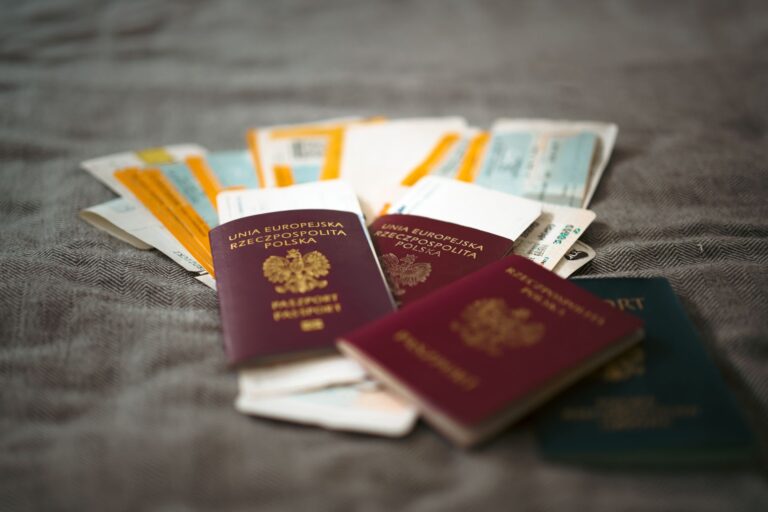
Apply for the visa through the official channels that the university tells you to use (the Study in Saudi platform or the embassy), with the following documents:
- The acceptance letter.
- A valid passport.
- The medical and police certificates.
- Proof of financial ability (if requested).
Students enter the Kingdom on a study visa, and the time it takes to issue the visa depends on the embassy and your case.
Step 7: Get your residence permit (iqama)
Scholarship students can obtain a free residence permit (iqama) with a letter from the university, with no fees. After you arrive in the Kingdom, the university’s passport department usually handles this, and the iqama is issued for the duration of your study.
Female students need a mahram according to the regulations. The mahram must be covered by a scholarship, hold a regular residence permit, or be registered with an employer who needs his services.
Ask the university in advance about its housing policy and the housing requirements for female students, including the mahram conditions.
Step 8: Receive the benefits and services offered to students
Students on scholarships at public universities receive a set of benefits which, according to the Ministry of Education, include:
- Healthcare.
- A financial allowance on arrival (for initial costs).
- University housing.
- An annual round-trip flight ticket to the student’s home country (according to the rules).
Make sure these benefits are listed in your acceptance letter and that they follow the Ministry of Education’s rules.
Step 9: Final registration and settling in at the university
After you arrive in Saudi Arabia, you must complete your official registration at the university by the deadline the university sets. This includes:
- Submitting the originals and copies of all your documents.
- Registering in the academic system.
- Attending an orientation session for new students.
- Getting a student card.
Register by the deadline set by your university; otherwise your place may be affected or your studies postponed.
Step 10: Follow Saudi rules and regulations
All students must follow the laws of the Kingdom, especially regarding public conduct, dress, activities, and residence. Some of the key rules are:
- Female scholarship applicants need a mahram according to the regulations.
- Follow the study hours and exam schedules.
- Work rules for international students depend on your residence status and university approval; confirm with your university and the official authorities before taking any job.
- Keep university housing safe and clean.
The university’s own regulations apply to you, and breaking them can have consequences for your studies and scholarship.
Frequently asked questions
Can I apply for a scholarship in Saudi Arabia without a language certificate?
Requirements depend on the university and the program. Programs usually ask for proof of your language level, for example IELTS or TOEFL for English-taught programs, or Arabic proficiency for Arabic-taught programs. Check the requirements of your chosen university.
Are scholarships offered for medicine and nursing?
Not through a scholarship. Health and medical specialties (medicine, nursing, pharmacy and similar) are excluded from scholarship applications for international students. Some universities publish separate fee-paying routes for non-Saudis, for example King Saud University and King Khalid University, so check the university’s own admission page.
How long is the residence permit for a student in Saudi Arabia?
The residence permit (iqama) is issued free by the university for scholarship students and is valid for the study period. Renewal rules depend on the university, so check with its passport department.
Can I study in Saudi Arabia on a tourist visa?
No. A tourist visa is not a study visa. You must get an educational visa through the channels the university and the Saudi authorities specify, such as the Study in Saudi platform or the embassy.
Are scholarships offered to students from the Gulf countries?
Scholarships at public universities are open to non-Saudi international students under the same conditions and procedures. Apply through the studyinsaudi.sa platform, the university, or the Saudi Cultural Mission, and attach your own government’s approval if your country requires it.
The steps to study in Saudi Arabia from A to Z in 2026 require careful planning and close attention to the official procedures. From registering on the study platform, through applying for scholarships, to receiving your iqama and settling into academic life, every step is part of a successful journey. Make sure you review all requirements for your personal situation, and base your decision on reliable information. If you need help choosing a university or submitting an application, do not hesitate to contact our team for a free consultation.
Ministry of Education: Scholarships in public universities
Study in Saudi platform (Ministry of Education)
Official sources
- Ministry of Education: Scholarships in public universities
- Study in Saudi platform (Ministry of Education)
More guides you may need
-

Qudurat and Tahsili Tests for Non-Saudis: Official Guide
Who needs the Qudurat and Tahsili as a non-Saudi, how to register, prepare and use your…
-

Saudi Certificate Equivalency and Recognition in Your Country
A step-by-step guide to Saudi certificate equivalency and recognition in your country: the competent authority, documents,…
-
Saudi Student Visa for International Students
A step-by-step guide to the Saudi student visa in 2026: acceptance, the Study in Saudi platform,…
-

Saudi University Admission Requirements for Non-Saudis
A step-by-step guide to Saudi university admission requirements for international students in 2026, covering registration, documents,…
-

Working in Saudi Arabia After Graduation as a Non-Saudi
A step-by-step guide for non-Saudis on working in Saudi Arabia after graduation: employer sponsorship, work permits,…
-

Working While Studying in Saudi Arabia
What international students should check before working while studying in Saudi Arabia: residence status, university approval…
Universities in Saudi Arabia
-

Dar Al-Hekma University: Admission, Fees and Scholarships for Non-Saudis
Dar Al-Hekma University admission for non-Saudis: 2026–2027 SAR fees per credit hour with 15% VAT, degree…
-

Effat University: Admission, Fees and Scholarships for Non-Saudis
Effat University admission for international students: requirements, published tuition per credit hour in SAR, extra annual…
-

Imam Abdulrahman Bin Faisal University: Admission, Fees and Scholarships for Non-Saudis
Imam Abdulrahman Bin Faisal University admission for non-Saudis: requirements, scholarship routes, the published stipend and what…
Scholarships in Saudi Arabia
-

KAUST Fellowship for Master’s and PhD Students
The KAUST Fellowship funds admitted master’s and PhD students with tuition, a monthly stipend, housing, health…
-

Partial and Paid Scholarships at Saudi Universities
Partial scholarships and paid places at Saudi public universities explained, using the Ministry of Education’s own…
-

Saudi Government Scholarship for International Students: Requirements and Benefits
Everything about the Saudi government scholarship for international students in 2026: types, age limits, requirements, official…
Thinking about studying in Spain too?
-

Study in Spain
Everything you need to know about studying in Spain in 2027: UNEDasiss admission, tuition costs by…
-

Best Universities in Spain for International Students
Discover the best universities in Spain for international students in 2026, with information on programmes, requirements,…