

The cost of living in Spain for students varies greatly between cities. It is often lower than common estimates, but it exceeds the official minimum required for the visa (IPREM €600 per month). While you must prove you have €7,200 a year (€600 a month) to apply for a student visa, the financial reality depends on your choice of city, type of housing and lifestyle. In this comprehensive guide, we analyse the gap between the legal minimum and financial reality, with examples from Madrid, Barcelona and Málaga, and guide you on how to plan effectively to study in Spain.
🧮 Calculate your study cost in Spain in your own currency – official fees by region and university, housing and living costs (estimated) and scholarship eligibility in one minute: Study cost calculator
The official minimum: what is IPREM and how much is required?
IPREM (Indicador Público de Renta de Efectos Múltiples) is the official minimum income required to prove financial capacity for international students applying for a student visa in Spain. Under Spanish law (RD 1155/2024), the student must prove at least €600 a month (€7,200 a year), with the possibility of deducting the rent amount if it is paid in advance.
If family members accompany you, 75% of IPREM (€450 a month) is added for the first member and 50% (€300) for each additional member. The student’s own 100% IPREM amount is not required if you prove you have prepaid housing for the whole stay (Article 35 of RD 1155/2024).
These funds must be held in an approved bank account, must not be used for withdrawals or transfers, and require official documentation (such as a bank statement). These amounts are part of the funding requirements when applying for a student visa, according to proof of funds for studying in Spain.
Financial reality: how much do you actually spend in Spanish cities?
While €600 a month is required as a minimum, real costs vary by city, type of housing and lifestyle. Big cities such as Madrid and Barcelona are usually more expensive than smaller cities such as Salamanca or Girona. There is no single official source for these costs, and the figures below are approximate estimates.
Here is an approximate, unofficial comparison of monthly living costs (general estimates that may change, except transport):
| City | Rent (single room in a shared flat) | Food | Transport | Health insurance | Personal spending | Monthly total (approximate) |
|---|---|---|---|---|---|---|
| Madrid | €450–600 | €200–250 | €20 (Abono Joven up to age 26, reduced to €10 with the 2026 discount) | €50–80 | €100–150 | about €820–1,100 |
| Barcelona | €500–700 | €220–280 | about €15/month (T-jove: €45.50 per 90 days in 2026) | €50–80 | €120–180 | about €905–1,255 |
| Málaga | €350–500 | €180–220 | €30–50 | €50–80 | €90–130 | €700–980 |
| Salamanca | €300–450 | €160–200 | €25–40 | €50–80 | €80–120 | €615–890 |
Note: rent, food, spending and insurance in the table are approximate, unofficial estimates that depend on housing quality and lifestyle, while transport prices in Madrid and Barcelona are taken from official youth pass prices.
Rent: can you reduce it?
Rent is one of students’ biggest monthly expenses. In Madrid and Barcelona, the rent for a room is usually higher than in smaller cities (a general, unofficial estimate).
Shared accommodation and student residences (residencias universitarias) are an ideal option for students, because the price includes some services such as internet, electricity and cleaning. Some universities also offer discounts for international students or run housing exchange programmes.
Living with a host family (homestay) is available in some cases and may include meals; prices vary widely between cities.
Transport: how do you get around the city?
Public transport in Spain is efficient and widely available, but it has monthly costs. In Madrid the Abono Joven costs €20 a month for young people up to 26 (€10 with the 2026 discount), and in Barcelona the T-jove card costs €45.50 per 90 days (2026). In Seville the TUSSAM youth card costs €8.80 a month.
In small cities such as Salamanca, you can rely on walking or cycling, which reduces costs. In big cities you may have to use the metro or buses, and it is better to buy a monthly pass to avoid daily costs.
Important: students are allowed to work while studying (up to 30 hours a week), but this does not cover transport costs, and it is advisable to rely on monthly or reduced student tickets.
Health insurance: what is required?
All international students are required to have private health insurance with a company approved in Spain. Access to the public health system has its own conditions; check your status after arrival.
Different insurers offer plans for students, and their costs vary by company and coverage (the amount in the table is an approximate estimate). It is advisable to choose insurance that covers chronic conditions, psychological treatment and treatment in private hospitals.
If you study at a public university, the university may offer some facilities or contracts with insurers, so it is best to check the university’s website or the student services department.
Tuition fees: do they affect the cost of living?
Tuition at public universities in Spain is low compared with other countries, but it varies by region and university. In Madrid, a non-resident student from outside the European Union usually pays the fourth-enrolment price: €113.71–136.44 per ECTS, i.e. about €6,823–8,186 per 60 ECTS (resident prices are much lower). In Catalonia the general price is €17.69 per credit for residents and EU students.
In Catalonia, universities may charge non-resident students from outside the Union up to the full cost (for example UPC bachelor’s €30/credit, and UPF €6,800.32 for the first year 2026-27). In Andalusia the base price for a bachelor’s degree is about €12.62/credit and the university may add a surcharge.
If you study at a private university, fees are much higher (for example Deusto from €6,390 to €17,850 and Navarra from €12,175 to €20,400 for the first year 2026-27, and ESADE about €21,300). It is therefore advisable to look for programmes with reasonable fees, or to apply for scholarships.
For precise details on fees at public universities, see tuition fees at public universities in Spain.
Working while studying: does it cover the costs?
Yes, international students are allowed to work while studying in Spain, up to a maximum of 30 hours a week, and only within the autonomous community where you live (plus neighbouring towns), under Article 57 of Decree 1155/2024. A separate work permit is not required, but the work must be compatible with your studies.
Part-time work may help cover part of the costs, but it cannot be relied on to fund your studies; you must prove your financial capacity when applying without counting expected income.
It is advisable to work in fields related to your studies, such as tutoring, translation, working in university libraries or in student training centres. Internships (prácticas curriculares) are also allowed without an additional permit and are an excellent opportunity to improve skills and increase income.
Tips to reduce the cost of living in Spain
- Choose a lower-cost city: Málaga, Salamanca or Girona are better options than Madrid and Barcelona in terms of costs.
- Use shared accommodation: it reduces costs and provides an ideal social environment for students.
- Cook at home: eating out less lowers monthly spending.
- Use monthly transport passes: they reduce daily costs and save time.
- Take advantage of student benefits: many museums, parks and transport services offer student discounts.
- Apply for scholarships: some universities offer scholarships to international students based on academic performance.
Frequently asked questions
Can I use my bank account in my home country as proof of funds?
Yes, resources can be proved with a bank account, a scholarship or proven funding, and the consulate determines the accepted documents and the required statement period; check its requirements before applying.
Can I reduce the required amount if I pay rent in advance?
Yes, the student’s own 100% IPREM amount is not required if you prove you have prepaid housing for the whole stay (Article 35 of RD 1155/2024), provided you submit proof (such as the housing contract and payment receipt) as accepted by the consulate.
What is the maximum number of working hours allowed for students?
Students may work up to 30 hours a week, and only in the regional area where they study. Work must not hinder your studies.
Do tuition fees cover the cost of living?
No, tuition fees do not cover the cost of living. You must set aside a separate budget for rent, food, transport and insurance. In big cities, costs are usually higher (a general estimate).
Can I stay in Spain after graduating?
Yes, Royal Decree 1155/2024 provides a residence permit to look for work or launch a venture after graduation for up to 24 months; this permit itself does not allow work, and working requires obtaining the appropriate authorisation.
The cost of living in Spain for students varies by city, but it remains within reasonable limits compared with other European countries. With good planning, you can manage spending according to city and lifestyle. Remember that the minimum required for the visa (€600 a month) is only a legal minimum, while the financial reality depends on your choices. Use this information to build a realistic budget, and start your study journey in Spain with confidence.
Official sources
- Comunidad de Madrid: precios públicos universitarios
- Generalitat de Catalunya: precios estudios universitarios
- Exteriores: IPREM table
More cost guides
-
Budget for a Year of Study in Spain
A complete 2026 budget table for a year of study in Spain: tuition fees, proof of…
-

Cheapest Cities to Study in Spain
Discover the cheapest cities to study in Spain in 2026: Granada, Salamanca and Seville, with official…
-

Cost of Studying in Madrid vs Barcelona
Compare the cost of studying in Madrid vs Barcelona in 2026: tuition for non-EU students, living…
-

Master’s Fees in Spain
Master’s fees in Spain 2026 for international students: a full comparison of official (título oficial) and…
-
Private University Fees in Spain
Private university fees in Spain 2026: published tuition at IE, ESADE, Navarra and Deusto, extra costs,…
-

Public University Fees in Spain for International Students
Public university fees in Spain for international students in 2026: price per ECTS in Madrid, Catalonia…
Universities in Spain
-

Comillas Pontifical University – Study, Admission and Fees
Admission requirements, tuition fees, language of study, housing and scholarships at Comillas Pontifical University in Madrid,…
-
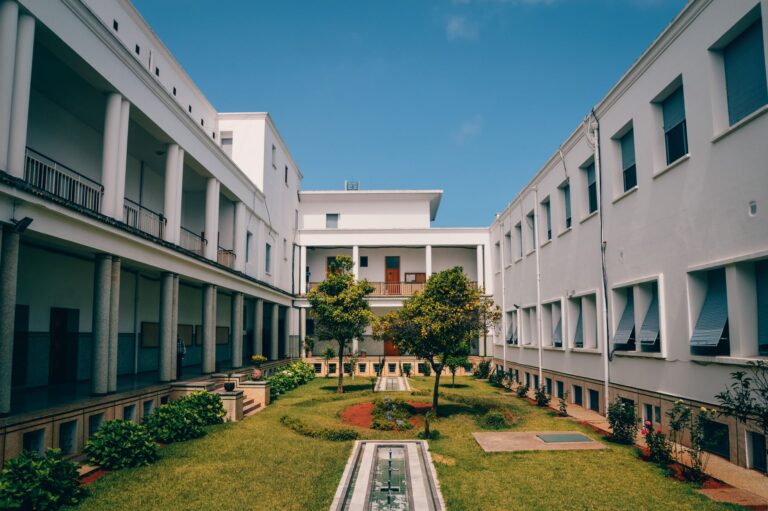
Complutense University of Madrid – Study, Admission and Fees
Admission requirements at Complutense University of Madrid for non-EU students, actual fees, language of study, housing…
-

European University of Madrid – Study, Admission and Fees
Admission for international students, fee information, language of study, housing and scholarships at the European University…
Scholarships in Spain
-

Master’s Scholarships in Spain
Discover master’s scholarships in Spain for 2026 through Erasmus Mundus and university schemes: requirements, funding, application…
-

Spanish Government AECID Scholarship
Everything about the Spanish government AECID scholarship 2026 for international students: conditions, funding, duration and visa…
-

Spanish Government Grants for Residents (Becas MEC)
Everything you need to know about the Spanish government grants for residents (Becas MEC) in 2026:…
Study in Spain guides
-
Daily Life as an International Student in Spain
A realistic guide to daily life as an international student in Spain: settling in, housing, transport,…
-

First Month in Spain: Checklist for International Students
A practical first-month-in-Spain checklist for international students: registration, enrolment, health insurance, TIE, banking and settling into…
-

Is Spain Safe for International Students?
Practical answers on whether Spain is safe for international students, with realistic tips on daily life,…
Thinking about studying in Serbia too?
-

Study in Serbia
Thinking about studying in Serbia in 2026? This guide covers tuition and living costs, top universities,…
-

Study in Spain or Serbia? Comparison 2026
Thinking of studying in Spain or Serbia? Compare 2026 tuition fees, language, work rules, residence after…