

If you are looking for a city that encourages learning and combines centuries of history with a lively student life, Salamanca in Spain is an ideal place to study. Known as a “city of scholars” and home to “the oldest university in Spain”, Salamanca offers a distinctive educational environment, a safe and friendly place to live, and a real chance for international students, including Muslim students, to build a successful academic and personal future. In this complete guide to studying in Salamanca, we cover universities, costs, housing, residence requirements, daily life and practical tips to help you settle in easily.
🧮 Calculate your study cost in Spain in your own currency – official fees by region and university, housing and living costs (estimated) and scholarship eligibility in one minute: Study cost calculator
Universities in Salamanca: Studying in Salamanca from an Academic Perspective
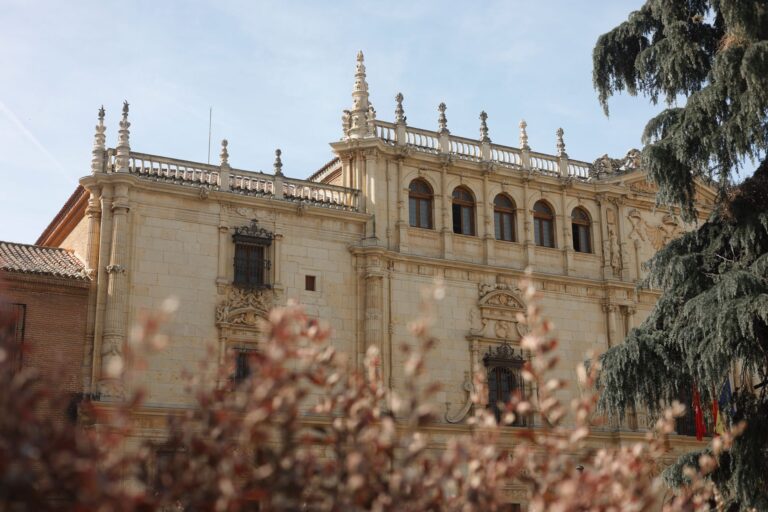
The University of Salamanca (Universidad de Salamanca) is the city’s main academic institution and one of the oldest universities in Europe, founded in 1218. It is among the most prominent universities in Spain, offering many programmes in fields such as law, medicine, science, literature and engineering, with international recognition and high placings in academic rankings.
Most programmes are taught in Spanish, and some may be available in other languages; check the language of instruction for each programme on the university’s official website. If you are thinking about studying in Salamanca, the university is the first choice, but not the only one. There are private universities and specialised educational institutions offering a range of subjects, such as business administration, technology and the arts.
If you are looking for varied academic options, you can explore the University of Salamanca and review its programmes, admission requirements and tuition fees.
Study Programmes in Salamanca: From Bachelor’s to Doctorate
The University of Salamanca offers official programmes (títulos oficiales) and its own programmes (títulos propios). Official programmes are accredited by the Spanish State and award internationally recognised qualifications, while own programmes are professional or specialised and are used to strengthen skills in a particular field.
- Bachelor’s degree (Grado): offered in subjects such as law, economics, literature, philosophy and engineering. Study duration is 4 years.
- Master’s degree (Máster): professional or academic programmes are offered, and they are required in some fields such as medicine or law. Study duration is one to two years.
- Doctorate (Doctorado): intended for researchers who want to carry out advanced research in a particular field.
Admission requirements vary by programme, but they usually require a recognised secondary school certificate, proof of language level according to each programme’s requirements (an advanced level of Spanish may be required for programmes taught in Spanish), and possibly additional entrance exams. For bachelor’s study you will usually need to legalise your foreign certificate (Apostille under the Hague Convention) with an official translation, and then obtain the accreditation card/PCE through UNEDasiss (this does not grant admission; pre-registration is done through the university/region). Recognition of a university degree is done through homologation (homologación) by the Ministry of Education (form 790, code 079, about 49.76 euros).
Living and Study Costs in Salamanca
Living costs in Salamanca vary with lifestyle and housing, and the living-cost figures below are approximate, unofficial estimates. Costs differ by lifestyle, type of housing and type of university (public or private).
Tuition Fees at Public Universities
Tuition fees at public universities are set by the autonomous communities (Comunidades Autónomas). Salamanca is in the Castilla y León region, where the prices of Decree 8/2024 apply, which set the price by field-of-study group and enrolment number, with no additional charge based on nationality.
Under Decree 8/2024 (with Annex I updated by Order EDU/459/2025), the price per credit at first enrolment in a bachelor’s degree ranges from 10.41 to 18.45 euros depending on the field-of-study group, i.e. about 625 to 1,107 euros for 60 credits; check the prices in force for the current academic year.
Fees are calculated by the number of credits (ECTS), with an academic year equal to 60 credits. In some regions such as Catalonia, fees of up to 100% of the real cost may be charged to non-EU students, but this does not currently apply in Salamanca.
| Type of programme | Annual fees (2026) | Notes |
|---|---|---|
| Bachelor’s degree (public) | About 625 – 1,107 euros (60 credits, first enrolment) | Depends on the field-of-study group (Decree 8/2024) |
| Master’s degree (public) | Varies by master’s programme; see Decree 8/2024 and the university website | Specialised programmes cost more |
| Doctorate | See Decree 8/2024 and the university website | Fees are set officially |
Fees at private universities are set by each university and may be much higher; see their official websites.
Monthly Housing and Living Costs
Salamanca is a city that offers suitable housing options for students, but it requires careful financial planning. Housing costs vary by location and type of housing, and the following figures are approximate, unofficial estimates.
- Shared flats (Piso compartido): 300 to 500 euros per month, depending on location.
- Single flats (Piso individual): 600 to 800 euros per month.
- University residence (Residencia universitaria): 250 to 450 euros per month, including meals in some cases.
Other monthly costs include:
- Transport: depends on use; check student pass fares with the city’s urban bus operator
- Food: 200 – 300 euros
- Phone and internet: 20 – 30 euros
- Activities and leisure: 50 – 100 euros
Overall, an approximate, unofficial range of 700 to 1,000 euros per month can be treated as a starting point for planning, bearing in mind that actual needs vary from person to person.
Visa and Residence in Salamanca: Requirements for International Students
If you are an international student who wants to study in Salamanca for more than 90 days, you must apply for a long-stay study permit (autorización de estancia de larga duración por estudios). This permit allows you to study, work part-time and stay legally in Spain.
Basic Visa Requirements
Visa requirements are set out in Spanish law (RD 1155/2024) and include:
- Formal admission to a recognised university in Salamanca.
- Proof of payment of tuition fees (or of a scholarship).
- A valid passport (check the minimum validity with the competent consulate).
- Public or private health insurance with a company authorised in Spain.
- A criminal record certificate issued within the past five years (for stays of more than 180 days).
- A medical certificate showing you do not have infectious diseases.
- Legalisation of foreign documents (such as the secondary school certificate) through Apostille or official legalisation, with an official translation into Spanish.
Costs and Timelines
Visa fees and processing times vary by consulate and case; check the website of the Spanish consulate responsible for your country and do not assume a fixed timeframe.
After obtaining the visa, you must apply for the foreigner identity card (TIE) within one month of entering Spain, at the local police office. This step is mandatory for extending your residence.
Working While Studying
Once you have your study visa, you are allowed to work up to 30 hours per week, provided the work is compatible with your studies. Work is generally within the Castilla y León community where you live (including bordering localities), under Article 57.
Work in academic placements (prácticas curriculares) does not require additional authorisation and is part of the study programme.
Everyday Life for International and Muslim Students in Salamanca
Salamanca is a student-friendly city, offering a safe and friendly environment and noticeable cultural diversity, especially among international students. The city hosts students from many countries, which may offer opportunities for cultural integration.
Housing and Student Community
The university provides student residences, which are an excellent option to start with, especially for new students. There are also many shared flats that you can find through platforms such as Idealista or Facebook Groups.
Student and community associations that organise cultural and religious events may exist; you can ask the university’s international students’ office. We do not have an official, documented list of prayer spaces, so check locally.
Halal Food
Salamanca offers limited halal food options, but it has seen noticeable development in recent years. Shops selling halal products may be available, but availability varies; check directly.
Some Arab or Turkish restaurants also offer halal options and often advertise this in their windows. We recommend calling restaurants in advance to confirm halal food is available.
Activities and Entertainment
Salamanca is a cultural and tourist city and offers many activities suited to students, such as:
- Visiting the university’s historic buildings and the General Historical Library (Biblioteca General Histórica).
- Joining cultural or sports clubs.
- Travelling to nearby cities such as Ávila, Toledo or Madrid.
- Following the cultural events announced by the university and the city.
Life in Salamanca feels like life in an old town, combining historic character with modern university life, which makes it an ideal place to study and grow personally.
Frequently Asked Questions
Can I study in Salamanca without knowing Spanish?
You can study on some programmes taught in English, especially at master’s and doctoral level. But most official programmes are taught in Spanish, so check the language level required for your programme.
What is the minimum financial means required to study in Salamanca?
Non-EU students are required to prove sufficient financial resources. In 2026, the minimum required is estimated at 600 euros per month (7,200 euros per year), plus 75% for the first family member and 50% for each additional member; the student’s own 100% of the IPREM is not required if you prove that housing has been paid in advance for the whole length of the stay (Article 35 of RD 1155/2024).
Are there scholarships for international students in Salamanca?
Scholarships for international students may be available and vary by year and programme; check the university’s official website and the government scholarship portals in your country and in Spain.
Can I stay in Spain after graduating?
Those who complete studies at EQF level 6 or above can apply for a residence permit to look for work or start a business for up to 24 months, non-renewable, during which work is not permitted; working requires an appropriate authorisation. Check the official conditions.
Are there mosques in Salamanca?
We do not have an official, documented list of prayer spaces in the city; you can ask the international students’ office or local associations for up-to-date information.
Studying in Salamanca is not just an academic choice but a life experience that changes your perspective. The city combines historical heritage with a university spirit and a comfortable living environment, making it an ideal destination for international students, including Muslim students. With leading universities, reasonable costs and opportunities for integration, Salamanca is one of the best cities in Spain to study in. Start your journey now and begin building your future in the heart of Europe.
Official Sources
- Junta de Castilla y León: Decreto 8/2024, precios públicos 2024-2025
- BOE: Real Decreto 1155/2024 (Reglamento de extranjería)
- Universidad de Salamanca
More cities
-
Study in Córdoba
Everything you need to know about studying in Córdoba: universities, living costs, housing, visa requirements and…
-
Study in Granada
Everything you need to know about studying in Granada: universities, living costs, housing, visa requirements and…
-
Study in Madrid
Everything you need to know about studying in Madrid: leading universities, living costs, housing, daily life…
-
Study in Málaga
Everything you need to know about studying in Málaga: universities, living costs, housing, daily life for…
-
Study in Seville
Everything you need to know about studying in Seville: universities, living costs, housing, daily life for…
-
Study in Valencia
Everything you need to know about studying in Valencia: universities, living costs, housing, daily life for…
Universities in Spain
-
University of Deusto – Study, Admission and Fees
Everything you need to know about the University of Deusto in Bilbao: admission for international students,…
-
University of Granada – Study, Admission and Fees
Admission requirements, actual fees, language of study, housing and scholarships at the University of Granada for…
-
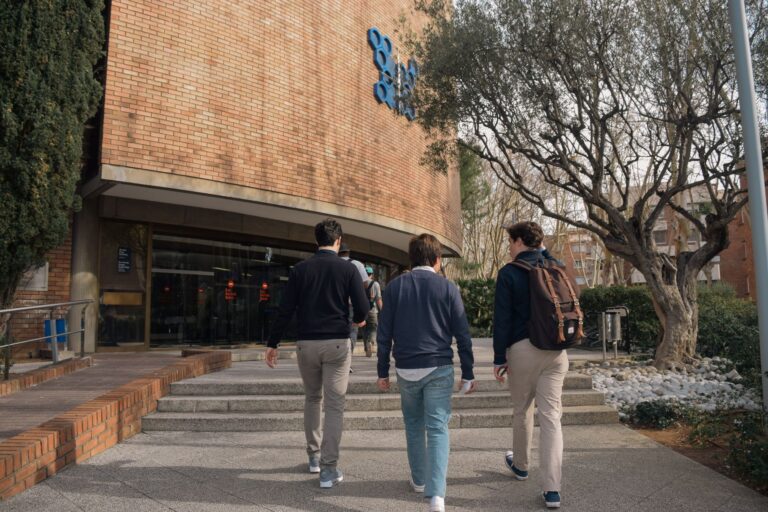
University of Málaga – Study, Admission and Fees
Learn about University of Málaga admission requirements for international students, actual tuition fees, language of study,…
Scholarships in Spain
-

Master’s Scholarships in Spain
Discover master’s scholarships in Spain for 2026 through Erasmus Mundus and university schemes: requirements, funding, application…
-
Spanish Government AECID Scholarship
Everything about the Spanish government AECID scholarship 2026 for international students: conditions, funding, duration and visa…
-
Spanish Government Grants for Residents (Becas MEC)
Everything you need to know about the Spanish government grants for residents (Becas MEC) in 2026:…
Study in Spain guides
-

Is Spain Safe for International Students?
Practical answers on whether Spain is safe for international students, with realistic tips on daily life,…
-
Muslim Student Life in Spain
A practical guide to Muslim student life in Spain, from academic enrolment to living peacefully with…
-
Student Transport in Spain
Practical tips on student transport in Spain in 2026: the types of transport, how to get…
Thinking about studying in Serbia too?
-

Study in Serbia
Thinking about studying in Serbia in 2026? This guide covers tuition and living costs, top universities,…
-

Study in Spain or Serbia? Comparison 2026
Thinking of studying in Spain or Serbia? Compare 2026 tuition fees, language, work rules, residence after…