

If you are looking for a study experience rich in culture and historic beauty, studying in Granada, in southern Spain, is one of the most attractive options for international students. The city combines a long Andalusian heritage with modern academic life, recognised universities and a safe, welcoming environment. This complete guide gives you everything you need to start your studies in Granada: admission requirements, housing, living costs, and everyday student life, including practical information for Muslim students.
🧮 Calculate your study cost in Spain in your own currency – official fees by region and university, housing and living costs (estimated) and scholarship eligibility in one minute: Study cost calculator
Universities in Granada: Where the Past Meets the Future
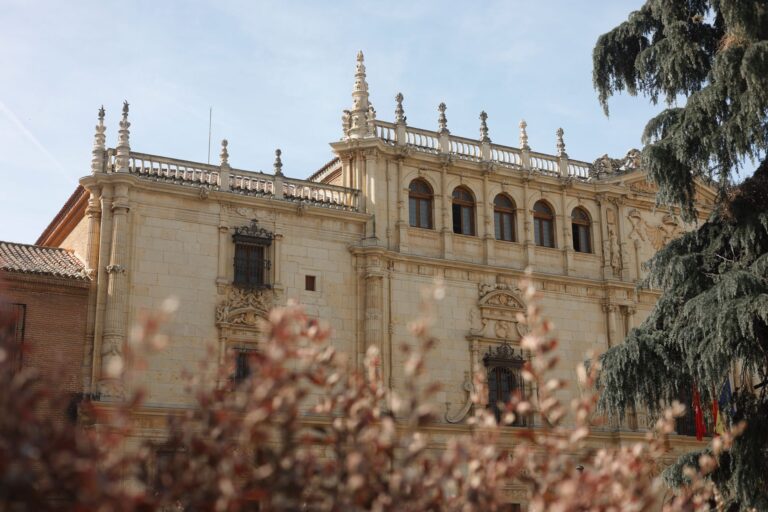
The University of Granada (Universidad de Granada) is the leading academic institution in the city, located in the region of Andalusia. It offers a wide range of programmes in science, engineering, medicine, literature, law and the arts, with a strong focus on research and innovation.
Most programmes are taught in Spanish, but a number are taught in English, especially at master’s level, which makes it easier for international students to settle in. The university also offers academic exchange programmes with universities around the world, and internship opportunities with local and international companies.
- Public university: Universidad de Granada – the main public university in the city, with a large student body (see the official figures at ugr.es).
- Private universities: Private universities in the city are limited; Universidad Loyola Andalucía has its campuses in Seville and Córdoba, not in Granada.
- Recognised programmes: Official programmes (Grados and Másteres) award official Spanish degrees; recognition in your home country is subject to your own country’s procedures.
If you are thinking of enrolling at a university in Granada, see University of Granada for the available subjects, admission requirements and tuition fees.
Study and Living Costs in Granada
Study costs in Granada are among the lowest compared with other major Spanish cities, especially at public universities. Fees vary by university, subject and nationality, but they remain reasonable for international students.
At public universities, fees are set by the regional government (Andalusia) and calculated by the number of credits (ECTS). Credit prices in Andalusia are set under Decree 98/2023, with a base price of about 12.62 euros per credit, and universities may charge non-EU students without residence an additional fee of up to the full cost (check with the University of Granada):
| Type | Fees (EUR/ECTS) | Notes |
|---|---|---|
| Public programmes (Grado) | ≈ 12.62 EUR/ECTS (base price) | Under Decree 98/2023; varies by degree and enrolment number, and an extra fee may apply to non-EU students without residence |
| Official master’s (Máster Oficial) | Varies | See the official price decree in BOJA and the university website |
| Private programmes | Vary widely | See each university’s website |
In addition to tuition fees, students should budget a monthly amount for living costs. Below are approximate, unofficial estimates of monthly living costs in Granada (800–1,200 euros), including:
- Housing: 300–500 euros/month (a room in a hall of residence or a shared flat)
- Food: 200–300 euros/month
- Transport: see the youth fares of the Consorcio de Transportes del Área de Granada (we have not verified current prices)
- Health insurance: 50–80 euros/month
- Activities and leisure: 100–150 euros/month
Granada may be cheaper than big cities such as Madrid and Barcelona, but prices vary with your lifestyle.
Visa and Residence: Requirements for Studying in Granada
To obtain a student visa for Spain, international students must submit a set of documents in accordance with Spanish law (RD 1155/2024). This permit is called “Autorización de Estancia de Larga Duración por Estudios” (long-stay study permit) and covers study at official universities or approved programmes.
The main requirements for the visa include:
- Official admission to a recognised university in Granada.
- Proof of payment of tuition fees (if required).
- A passport valid for at least one year.
- Public or private health insurance approved in Spain.
- A criminal record certificate issued within the last 5 years.
- A medical certificate showing that you do not have any infectious disease.
- Legalisation of foreign documents (Legalización/Apostilla under the Hague Convention) with an official translation into Spanish.
- For bachelor’s applicants: homologation (homologación) of your secondary school certificate through the Spanish Ministry of Education (form 790, code 079, about 49.76 euros), then accreditation/PCE through UNEDasiss, which does not admit students by itself; admission is through pre-registration (preinscripción) in the autonomous community.
- Proof of financial means: 600 euros per month (IPREM 2026), i.e. 7,200 euros per year, plus 75% extra for the first accompanying family member and 50% for each additional member; the student’s own 100% IPREM amount is not required if you show that housing has been paid in advance for the whole stay (article 35 of RD 1155/2024).
After the visa, you must apply for the “TIE” (Tarjeta de Identidad de Extranjero, foreigner identity card) within one month of entering Spain, at the local police office. Whether you need a Schengen visa for short stays (up to 90 days) depends on your nationality; for long studies (more than 90 days) you must apply in advance at the Spanish embassy or consulate in your country.
Processing times and fees vary by consulate and country, so check the website of the relevant consulate.
Housing in Granada: Good Options for Students
Granada offers varied housing options for different budgets, from university residences to shared flats.
- University residences: University and private residences are available; prices and conditions vary (see the university website). Apply early because places are limited.
- Shared flats (Pisos compartidos): Common among students and relatively economical, with shared expenses (prices change with the market). You can find flats on platforms such as Idealista or in local WhatsApp groups.
- Individual flats: Available but usually more expensive, and suited to students who want privacy.
It is advisable to look for housing before you arrive, especially in autumn, when demand for university housing rises.
Everyday Life for International and Muslim Students in Granada
Granada has a Muslim community, mosques and shops selling halal food, and it is a diverse university city.
Mosques in the city are important religious and social centres, the most notable being:
- The Great Mosque of Granada (Mezquita Mayor de Granada) in the Albaicín district – a religious and cultural centre; check prayer times.
- There are other Islamic centres; check their names and programmes directly.
There are also restaurants and shops offering halal food; check names and addresses yourself.
Social life in Granada is lively, with student activities, festivals and cultural events. Students can join student associations or take part in festivals such as the “Festival de Música de Granada” or the “Feria del Corpus”.
Spanish is an essential skill, but many international students learn it while studying, and some universities offer Spanish language courses for beginners.
Working While Studying: Real Opportunities
International students are allowed to work while studying in Spain without needing an additional work visa, provided the work is compatible with their studies, does not exceed 30 hours per week, and is within the autonomous community where they study (Andalusia) and its bordering localities, under RD 1155/2024.
Common jobs for students in Granada include:
- Language tutor (Spanish or other languages)
- Library or laboratory assistant
- Restaurant or hotel worker
- Translator or proofreader
- Supervisor at student training centres
Practical training (prácticas) in subjects such as business administration or engineering is also part of the curriculum and is allowed without a work visa.
Frequently Asked Questions
Can I study in Granada without speaking Spanish?
Yes, you can, especially in programmes taught in English, but most official university programmes are taught in Spanish. It is advisable to start learning the language before you arrive, or to join Spanish courses offered by the university.
How long is the student visa in Granada?
The length of the study stay and its renewal depend on the length of the programme, and renewal requires proof that you are continuing your studies; see the details on the website of the Ministry of Inclusion, Social Security and Migration.
Are there scholarships for international students in Granada?
Some universities offer scholarships, but they are rare for non-EU students. It is advisable to check the scholarships page of the University of Granada and Spanish government programmes such as AECID scholarships (some may be available to certain nationalities), and to verify the conditions of each scholarship.
Can I stay in Spain after graduating?
RD 1155/2024 allows graduates of studies at level 6 or above of the European Qualifications Framework (EQF) a job-search residence of up to 24 months, which is non-renewable and during which work is not allowed; a work permit can then be considered under the official conditions.
Are there mosques in Granada?
Yes, there are mosques and Islamic centres in Granada, including the Great Mosque; check prayer times and events.
Studying in Granada is a unique opportunity to combine higher education with a rich cultural experience in a city with a great Andalusian heritage. From distinguished universities to suitable housing and a comfortable, safe student life, Granada is an ideal destination for international students, including Muslim students, looking for a balance between academic excellence and cultural integration. Start your journey today, with one small step towards a bright future.
Official Sources
- BOJA – Decreto 98/2023 (precios públicos universitarios)
- Universidad de Granada
- Consorcio de Transportes Área de Granada
- Ministerio de Educación, FP y Deportes – homologación
- UNEDasiss
- Ministerio de Inclusión y Migraciones
- INE
More cities
-

Study in Barcelona
Everything you need to know about studying in Barcelona: top universities, living costs, housing, daily life…
-
Study in Córdoba
Everything you need to know about studying in Córdoba: universities, living costs, housing, visa requirements and…
-

Study in Madrid
Everything you need to know about studying in Madrid: leading universities, living costs, housing, daily life…
-

Study in Málaga
Everything you need to know about studying in Málaga: universities, living costs, housing, daily life for…
-
Study in Salamanca
Everything you need to know about studying in Salamanca: universities, living costs, housing, visa requirements and…
-

Study in Seville
Everything you need to know about studying in Seville: universities, living costs, housing, daily life for…
Universities in Spain
-

Carlos III University of Madrid – Study, Admission and Fees
Learn about Carlos III University of Madrid (UC3M) admission requirements for international students, tuition costs, language…
-

Comillas Pontifical University – Study, Admission and Fees
Admission requirements, tuition fees, language of study, housing and scholarships at Comillas Pontifical University in Madrid,…
-
Complutense University of Madrid – Study, Admission and Fees
Admission requirements at Complutense University of Madrid for non-EU students, actual fees, language of study, housing…
Scholarships in Spain
-

Erasmus Mundus Scholarship in Spain
Discover the Erasmus Mundus scholarship in Spain: €1,400 a month for joint master’s programmes across countries.…
-

Fundación Carolina Scholarship
Details of the 2026 Fundación Carolina scholarship for Latin American students: eligibility, funding, visa and how…
-

Master’s Scholarships in Spain
Discover master’s scholarships in Spain for 2026 through Erasmus Mundus and university schemes: requirements, funding, application…
Study in Spain guides
-

Is Spain Safe for International Students?
Practical answers on whether Spain is safe for international students, with realistic tips on daily life,…
-
Muslim Student Life in Spain
A practical guide to Muslim student life in Spain, from academic enrolment to living peacefully with…
-
Student Transport in Spain
Practical tips on student transport in Spain in 2026: the types of transport, how to get…
Thinking about studying in Serbia too?
-

Study in Serbia
Thinking about studying in Serbia in 2026? This guide covers tuition and living costs, top universities,…
-

Study in Spain or Serbia? Comparison 2026
Thinking of studying in Spain or Serbia? Compare 2026 tuition fees, language, work rules, residence after…