

Studying nursing in Spain is a respected and promising choice for international students who want to build a stable healthcare career in Europe. Spain offers an advanced healthcare education system, leading universities and internationally recognised nursing qualifications, plus a specialisation route for nurses through the EIR exam (Enfermero Interno Residente). However, studying in Spain requires a careful understanding of admission requirements, language and legal procedures, especially for non-EU students. This complete guide covers everything about studying nursing in Spain, from university registration to professional licensing, including details on fees, visas and future opportunities.
🧮 Calculate your study cost in Spain in your own currency – official fees by region and university, housing and living costs (estimated) and scholarship eligibility in one minute: Study cost calculator
Can I study in Spain without speaking Spanish?
No. You cannot enrol in a bachelor’s degree in nursing in Spain without a good command of Spanish, because all university programmes in this field are taught in Spanish. Preparatory courses or training programmes in English may exist, but they are not a substitute for a recognised bachelor’s degree.
Spanish is not just a communication requirement; it is essential for academic and professional success, especially in clinical practice. You must therefore prove your language ability with an official certificate such as the DELE (Diploma de Español como Lengua Extranjera) or an equivalent, and the required level varies from one university to another.
If you plan to enrol in a programme in Spain, learning Spanish early is a decisive step. You can start with courses at language centres in your home country, or enrol in preparatory programmes in Spain before your official studies begin.
Admission requirements for studying nursing in Spain
Admission requirements for nursing in Spain vary by university and region, but there are general requirements that apply to all non-EU students. They include:
- A secondary school leaving certificate (Bachillerato) or equivalent, validated by the Spanish Ministry of Education. The Grado en Enfermería (bachelor’s degree in nursing) lasts 4 years (240 ECTS).
- Completing the recognition of your secondary school certificate (homologación) by the Spanish Ministry of Education (Ministerio de Educación, FP y Deportes). This step is mandatory for students from outside the European Union.
- Taking the Pruebas de Competencias Específicas (PCE), organised by UNED through UNEDasiss. They are optional and can add up to 4 points to your admission score. UNEDasiss does not admit students; admission is through pre-registration (preinscripción) at the university or region.
- Proof of Spanish proficiency at the level the university requires.
- Legal documents such as a valid passport, a criminal record certificate (for stays of more than 180 days) and a medical certificate confirming physical and mental health.
It is advisable to start the certificate recognition process early, because it can take a long time. You can find details on the official portal of the Community of Madrid.
Universities that teach nursing in Spain
Spain is one of the European countries with a wide network of universities that teach nursing to a high standard and offer intensive practical training. Examples of universities that teach nursing (this is not a ranking or a recommendation; check RUCT and the official websites):
- Universidad Complutense de Madrid – a public university offering the nursing degree.
- Universidad Autónoma de Madrid – a public university offering the nursing degree.
- Universitat de Barcelona – a public university offering the nursing degree (the proportion of Catalan and Spanish as languages of instruction varies).
- Universitat de València – a public university offering the nursing degree.
- Universidad de Salamanca – a public university offering the nursing degree.
To compare universities, see the best universities in Spain guide, with an analysis of programmes, fees and campus life.
Cost of studying nursing in Spain
The cost of studying nursing in Spain varies by university, region and type (public or private). At public universities, fees are much lower than at private ones. They are set by each autonomous community per credit (ECTS) and may be higher for non-resident students from outside the European Union. Examples: Madrid 136.44 €/ECTS for level 1 (usually health sciences) at the fourth-enrolment price, which is about 8,186 € for 60 ECTS; Catalonia 17.69 €/credit for first enrolment, with a possibly higher price for non-residents; Valencia double the base price; Andalusia 12.62 €/credit as a base, with a possible surcharge by the university; Castilla y León no surcharge based on nationality (10.41–18.45 €/credit).
Private universities, by contrast, set their own fees; check each university’s official website.
In addition to tuition, students must cover living costs, estimated at 600 € per month (7,200 € per year) according to IPREM 2026. This is the minimum required to prove funds, and the student’s own 100% of IPREM is not required if you prove that housing is paid in advance for the whole stay (Article 35 of RD 1155/2024); it is not an estimate of actual living costs.
You must also pay the university registration fee, the visa fee (which varies by consulate), and the fee for recognition of the secondary school certificate (form 790 code 079, about 49.76 €).
For accurate fee information, visit the official website of the university you choose, or read admission requirements in Spain.
Visa and residence for international students
To study nursing in Spain, a non-EU student needs a long-stay study permit (autorización de estancia de larga duración por estudios) for a period of more than 90 days. This visa is issued by the Spanish embassy or consulate in your country.
The visa requires proof of admission to an accredited university, payment of tuition, and documents such as:
- A valid passport (valid for at least one year).
- The university’s admission letter.
- Proof of financial means (7,200 € per year, or 600 € per month).
- Private health insurance (accepted in Spain).
- A criminal record certificate (covering the last 5 years).
- A medical certificate.
After entering Spain, the student must register at the police office (Oficina de Extranjería) within one month of arrival and obtain the residence card (TIE). This card is the official document proving your residence; working while studying is subject to the restrictions of the study permit (up to 30 hours per week under Article 57 of RD 1155/2024).
Students are allowed to work while studying for a maximum of 30 hours per week, and only within the autonomous community where they study and its neighbouring localities (Article 57 of RD 1155/2024), provided the work is compatible with the study timetable.
Recognition of nursing qualifications and job opportunities in Spain
After completing the bachelor’s degree in nursing, you can apply to work in the healthcare sector in Spain, but you must also register with the professional nursing college (Colegio Oficial de Enfermería) in the province where you will work (colegiación), and have your qualification recognised if it is foreign.
To specialise in nursing, the EIR exam (Enfermero Interno Residente) is used within the specialised healthcare training (FSE) announced by the Ministry of Health; MIR is for medicine. In the 2026 call, 12,366 places were announced for all FSE specialties, including 2,279 places for EIR, of which 23 were reserved for foreigners without a residence permit in Spain.
If your nursing degree is foreign, it must be recognised (homologación) under Royal Decree 889/2022 by the ministry responsible for universities, a procedure that requires documents to be certified and officially translated. Check the conditions of the EIR call for the relevant year.
For official information on the MIR 2026 exam, you can visit the Spanish Ministry of Health source.
Practical steps to start studying nursing in Spain
Here is a practical roadmap to start studying nursing in Spain:
- Choose the right university and programme based on specialty, location and fees.
- Start the process of recognising your secondary school certificate with the Spanish Ministry of Education.
- Register for the PCE tests through UNEDasiss, if you want to improve your chances of admission.
- Prepare for a Spanish language test (DELE or whatever the university requires).
- Submit your application to the university.
- Obtain official admission, then apply for the visa at the Spanish consulate.
- Travel to Spain and register at the police office (TIE) within one month of arrival.
- Enrol at the university and start your studies.
For a complete guide to all these steps, see admission requirements in Spain.
Frequently asked questions
Can I study in Spain in English?
Most nursing programmes are taught in Spanish (and some in Catalan or Galician depending on the region), so check the language of instruction at each university; a good command of Spanish is essential for academic and professional success.
How much do the visa and residence cost in Spain?
Visa fees vary by consulate. The minimum required to prove funds is 600 € per month (7,200 € per year) according to IPREM 2026, which is not an estimate of actual living costs.
Can I work while studying in Spain?
Yes, non-EU students are allowed to work up to 30 hours per week, provided the work is compatible with the study timetable and limited to the region where the student lives.
What is the FSE exam (MIR/EIR) and how do I apply?
MIR is the medicine route in the specialised healthcare training exam (FSE), while the nursing route is EIR. The Ministry of Health announced 12,366 places for all FSE specialties in 2026, including 2,279 for EIR. Graduates from abroad can apply after their qualification has been recognised, under the conditions of the call.
Is a foreign nursing degree recognised in Spain?
No, a foreign nursing degree is not automatically recognised in Spain. You must complete the recognition of your qualification (homologación) under Royal Decree 889/2022 with the ministry responsible for universities, with certified documents and an official translation.
Studying nursing in Spain is a real opportunity for international students to join an advanced healthcare system, with job opportunities and international recognition. But success depends on planning ahead, following the admission and visa procedures, and reaching the required language level. If you are thinking of starting this journey, begin today by researching the right university and follow the registration steps carefully. Studying nursing in Spain is not just a degree; it is the start of a respected career in Europe.
Official sources
- Comunidad de Madrid: acceso desde estudios extranjeros
- Ministerio de Sanidad: oferta FSE 2026
- BOE: Real Decreto 889/2022 (homologación de títulos extranjeros)
- UNEDasiss (UNED)
- RUCT: Registro de Universidades, Centros y Títulos
More subjects
-

Study Computer Science in Spain
Everything about studying computer science in Spain: admission requirements, language of study, leading universities and tuition…
-
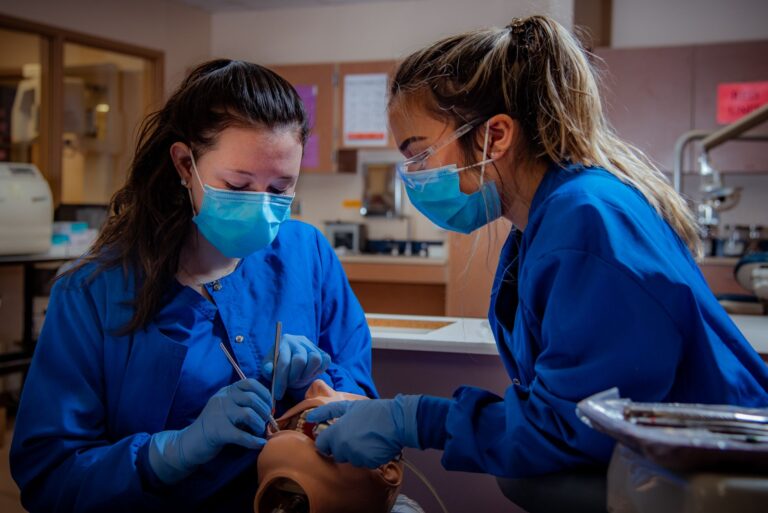
Study Dentistry in Spain
Everything you need to know about studying dentistry in Spain in 2026: admission requirements, language, universities,…
-

Study Engineering in Spain
Everything international students need to know about studying engineering in Spain in 2026: admission requirements, language,…
-

Study Law in Spain
A complete 2026 guide to studying law in Spain: admission requirements, language of study, top universities,…
-

Study Media in Spain
A complete 2026 guide to studying media in Spain: admission requirements, language of study, leading universities,…
-

Study Medicine in Spain
Everything international students need to know about studying medicine in Spain: admission requirements, language, universities, costs…
Universities in Spain
-

University of Deusto – Study, Admission and Fees
Everything you need to know about the University of Deusto in Bilbao: admission for international students,…
-

University of Granada – Study, Admission and Fees
Admission requirements, actual fees, language of study, housing and scholarships at the University of Granada for…
-

University of Málaga – Study, Admission and Fees
Learn about University of Málaga admission requirements for international students, actual tuition fees, language of study,…
Scholarships in Spain
-

Erasmus Mundus Scholarship in Spain
Discover the Erasmus Mundus scholarship in Spain: €1,400 a month for joint master’s programmes across countries.…
-

Fundación Carolina Scholarship
Details of the 2026 Fundación Carolina scholarship for Latin American students: eligibility, funding, visa and how…
-

Master’s Scholarships in Spain
Discover master’s scholarships in Spain for 2026 through Erasmus Mundus and university schemes: requirements, funding, application…
Study in Spain guides
-
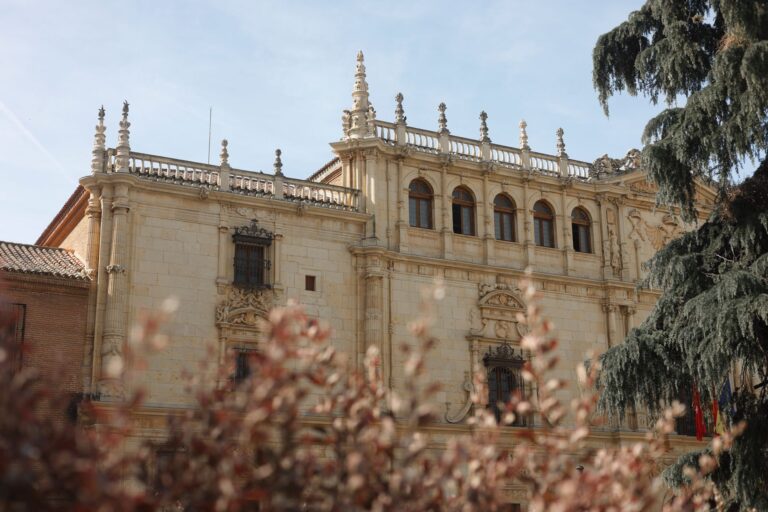
Daily Life as an International Student in Spain
A realistic guide to daily life as an international student in Spain: settling in, housing, transport,…
-

First Month in Spain: Checklist for International Students
A practical first-month-in-Spain checklist for international students: registration, enrolment, health insurance, TIE, banking and settling into…
-

Is Spain Safe for International Students?
Practical answers on whether Spain is safe for international students, with realistic tips on daily life,…
Thinking about studying in Serbia too?
-
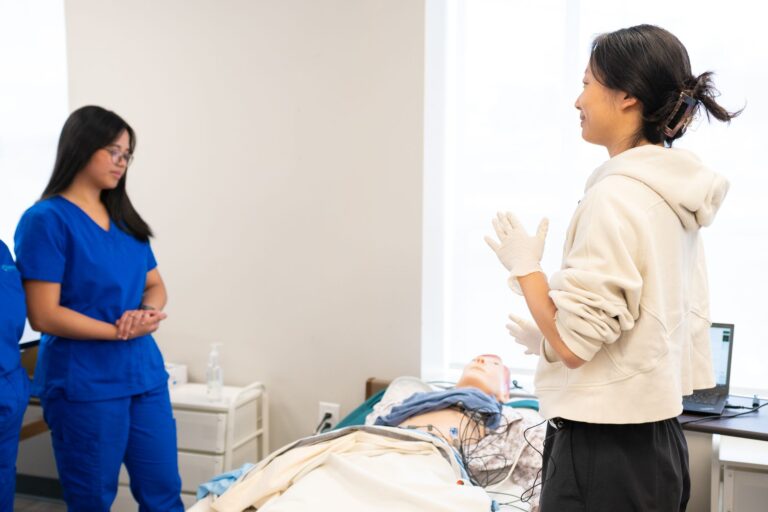
Study Nursing in Serbia
Details on studying nursing in Serbia in English through the bachelor’s programme at the University of…
-

Study in Serbia
Thinking about studying in Serbia in 2026? This guide covers tuition and living costs, top universities,…
-

Study in Spain or Serbia? Comparison 2026
Thinking of studying in Spain or Serbia? Compare 2026 tuition fees, language, work rules, residence after…