

If you are looking for fields of study in Spain that fit your academic and career goals, you are in the right place. Fields of study in Spain range from official university degrees to vocational education, and they let international students join an international learning environment, with the possibility of working under conditions while studying and a limited residence period to look for a job after graduation. In this complete guide we review the main fields, with direct links to the sub-pages that cover each one in detail, from medicine to computer science, and on to tourism and hospitality.
🧮 Calculate your study cost in Spain in your own currency – official fees by region and university, housing and living costs (estimated) and scholarship eligibility in one minute: Study cost calculator
Main fields of study in Spain in 2026
Fields of study in Spain are spread across official degrees (Grado, usually 240 ECTS and longer for regulated professions; Máster, 60 to 120 ECTS; and Doctorado), governed by Royal Decree 822/2021 and Royal Decree 99/2011, and university-specific qualifications (títulos propios), which universities award but which are not official degrees, so check that the programme is registered in the RUCT. You can review the bachelor’s, master’s, PhD and vocational education (FP) pages to understand each stage. These fields differ in career direction, registration requirements and job opportunities in the local and international market. Below are the main areas covered by our detailed pages for 2026.
- Medicine – a 6-year degree (360 ECTS) with competitive admission requirements.
- Dentistry – a regulated professional degree that requires precise admission and certificate-recognition requirements.
- Pharmacy – a professional degree usually taught in Spanish, where you need to check the conditions for practising the profession.
- Nursing – a 4-year university degree (240 ECTS) that includes clinical training and requires a good command of Spanish.
- Engineering – covers many specialisations such as mechanical, electrical and environmental engineering.
- Computer science – covers programming, systems and data; programmes are available in Spanish and some in English.
- Business administration – taught in Spanish or English at many universities.
- Tourism and hospitality – the Grado en Turismo (240 ECTS), which usually includes practical training.
- Architecture – a route from a Grado (300 ECTS) followed by a master’s that qualifies you to practise as an architect (Orden EDU/2075/2010).
- Law – usually taught in Spanish, and practising as a lawyer in Spain requires a profession-specific master’s.
- Psychology – one of the social fields in demand in the health and education sectors.
- Media and communication – suitable for students interested in writing, photography and media production.
Registering for fields of study in Spain: practical steps
Registering for a field of study in Spain requires following official steps that vary by university and programme, but they follow a general pattern that includes online registration, confirmation of admission and applying for a study visa. Start by checking the admission requirements for each field, including language requirements, required documents and tuition fees.
Tuition fees vary by type of university and field. At public universities each autonomous community sets the price per credit; for a non-EU student without residence in Madrid it is about 6,823–8,186 € per 60 ECTS, and fees in Catalonia can reach the full cost. At private universities each university publishes its own prices: for example, IE University announced about 27,300 € per year for most bachelor’s programmes for 2027-28, and first-year fees at the Universidad de Navarra for 2026-27 range from about 11,750 to 20,400 €. You will find the details on the public university fees and private university fees pages. Programmes taught in Spanish require proof of a language level set by each university (often B2), and programmes in English may ask for a certificate such as IELTS or TOEFL.
Application requirements for fields of study in Spain
To secure admission to any field of study in Spain, you must submit a set of official documents in accordance with Spanish law (RD 1155/2024). These requirements include:
- A valid passport covering the duration of the procedure, according to the consulate’s instructions.
- Proof of admission from an accredited educational institution (universidad o centro autorizado).
- Private or public health insurance in Spain, from a company authorised by the Spanish authorities.
- A criminal record certificate issued within the last five years, legalised and officially translated into Spanish.
- A medical certificate showing you have no infectious or chronic diseases that would impede your studies.
- Authentication of foreign documents (legalización o apostilla) with an official translation into Spanish.
- Proof of funds equal to 100% of IPREM 2026, i.e. 600 € per month (7,200 € for 12 months), plus 75% for the first family member and 50% for each additional one. The student’s own 100% of IPREM is not required if you prove that housing is prepaid for the whole stay (article 35 of RD 1155/2024).
Residence and work while studying in Spain
If you are admitted to a field of study in Spain, you must apply for a study stay authorisation (autorización de estancia por estudios) through the Spanish consulate in your country. It is not granted automatically on admission, but only after you meet the requirements on documents, financial means and insurance. Its duration is tied to the length of the programme and is subject to renewal conditions.
While studying, you may work up to 30 hours per week within the autonomous community where you live (with the possibility of working in bordering localities), provided that it does not conflict with your study obligations. This is an excellent opportunity to build professional experience and ease living costs. Curricular internships (prácticas curriculares) also do not require an additional authorisation.
Steps after arriving in Spain
After arriving in Spain, you must apply for your residence card (TIE) at the Foreigners’ Office or the competent police station within one month of entry. This card is necessary for all official procedures, such as registering at a hospital, opening a bank account or applying for a job.
- Register at the police station (comisaría) within 30 days of entry.
- Collect your residence card (TIE) at the registration office.
- Keep the valid health insurance that you submitted with your residence application.
- Open a bank account in Spain (for example BBVA, Santander or CaixaBank).
- Register at the university or educational institution.
Career opportunities after graduating from fields of study in Spain
Job opportunities after graduation depend on the field, your language level and your residence status, and no programme guarantees a job. After graduation, holders of EQF level 6 or higher qualifications can apply for a residence permit to look for work or start a business for up to 24 months, non-renewable, which does not allow work during the search period.
Labour-market needs differ between fields and regions, so check the data of the public employment service (SEPE) and the requirements for practising regulated professions such as medicine, law and architecture before choosing a field.
Frequently asked questions
Can I study in Spain without a Spanish language certificate?
Yes, you can study some fields that are taught in English, but fields taught in Spanish require proof of a language level set by each university (often B2), such as a DELE or SIELE certificate.
What are the monthly costs of studying in Spain?
Costs vary by city and university, and monthly expenses vary with the city and lifestyle. The minimum financial means required is 100% of IPREM 2026, i.e. 600 € per month for the student, with increases for family members. The student’s own 100% of IPREM is not required if you prove that housing is prepaid for the whole stay (article 35 of RD 1155/2024).
Can I extend my stay after graduation?
Holders of EQF level 6 or higher qualifications can apply for a residence permit to look for work or start a business for up to 24 months, non-renewable, which does not allow work during that time. To stay beyond it, you need a suitable authorisation, such as a work permit, under its conditions.
How long do fields of study in Spain take?
Duration varies by field: a Grado of 240 ECTS (4 years) in most cases, longer for some professions; a master’s of 60 to 120 ECTS; and a doctorate of up to 3 years full-time or 5 years part-time. The length of your stay is tied to the length of the official programme.
The best choice for a strong career starts with choosing the right field. Fields of study in Spain in 2026 offer an advanced learning environment, real job opportunities and a culturally diverse setting. Whether you are looking for a career in medicine, technology or tourism, Spain is an ideal destination for international students. Start your journey now by taking a realistic step towards choosing your field.
Official sources
- BOE: Real Decreto 822/2021 (ordenación de las enseñanzas universitarias)
- BOE: Real Decreto 99/2011 (doctorado)
- BOE: Orden EDU/2075/2010 (Arquitecto)
- BOE: Real Decreto 1155/2024 (Reglamento de extranjería)
Universities in Spain
-
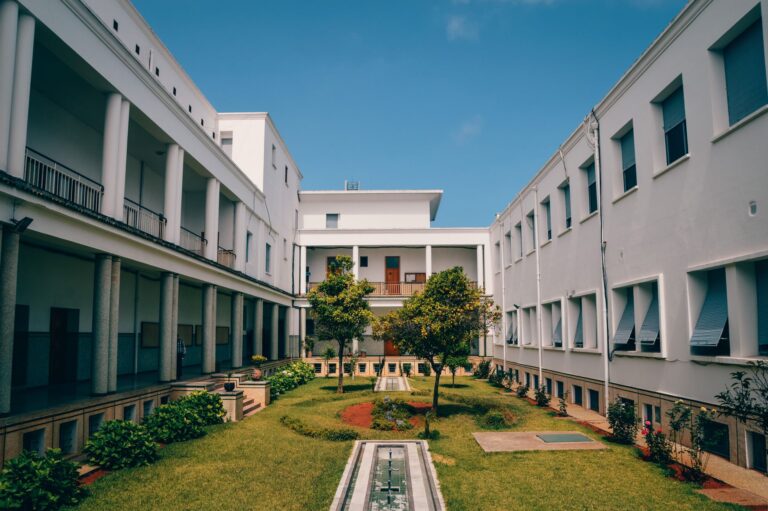
Polytechnic University of Madrid (UPM): Study, Admission and Fees
Admission requirements at the Polytechnic University of Madrid (UPM) for international students, tuition fees for non-EU…
-

Polytechnic University of Valencia – Study, Admission and Fees
Learn about Polytechnic University of Valencia (UPV) admission requirements for international students, actual tuition fees, language…
-
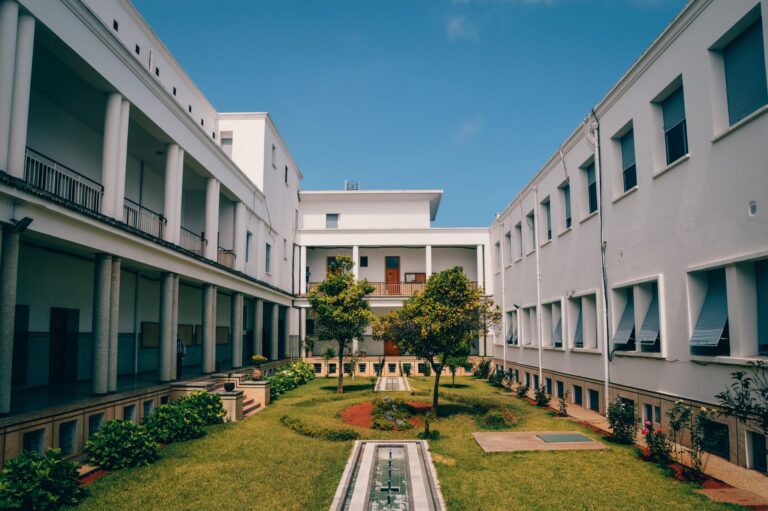
Pompeu Fabra University (UPF): Study, Admission and Fees
Everything you need to know about Pompeu Fabra University in Barcelona: admission requirements for international students,…
Scholarships in Spain
-

Can You Study in Spain for Free?
Can you study in Spain for free? The truth: public fees are low for residents, scholarships…
-

Erasmus Mundus Scholarship in Spain
Discover the Erasmus Mundus scholarship in Spain: €1,400 a month for joint master’s programmes across countries.…
-

Fundación Carolina Scholarship
Details of the 2026 Fundación Carolina scholarship for Latin American students: eligibility, funding, visa and how…
Study in Spain guides
-
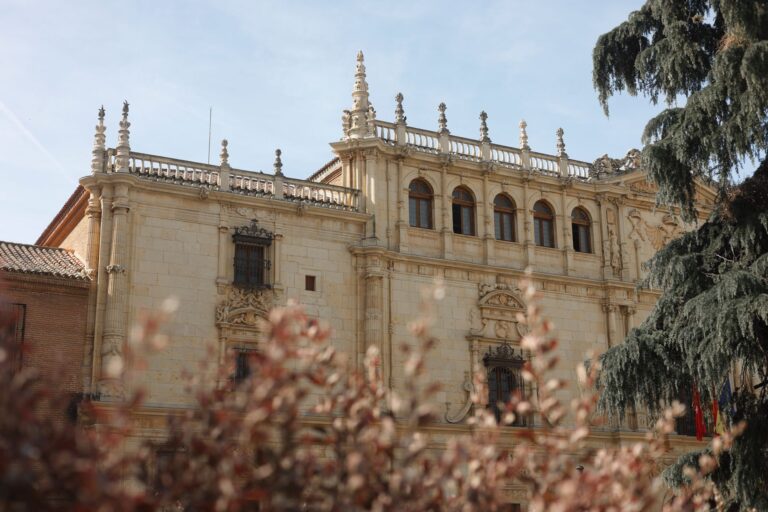
Daily Life as an International Student in Spain
A realistic guide to daily life as an international student in Spain: settling in, housing, transport,…
-

First Month in Spain: Checklist for International Students
A practical first-month-in-Spain checklist for international students: registration, enrolment, health insurance, TIE, banking and settling into…
-

Is Spain Safe for International Students?
Practical answers on whether Spain is safe for international students, with realistic tips on daily life,…
Thinking about studying in Serbia too?
-

Study in Serbia
Thinking about studying in Serbia in 2026? This guide covers tuition and living costs, top universities,…
-

Study in Spain or Serbia? Comparison 2026
Thinking of studying in Spain or Serbia? Compare 2026 tuition fees, language, work rules, residence after…