

If you are thinking of doing a master’s degree in Spain, you will face a key choice: an official state-recognised programme, or a private one (Título Propio) offered by universities or non-governmental institutions? Each option has pros and cons, with a direct impact on study length, costs, visa and future job prospects. In this complete guide, we explain the differences between an official and a private master’s in Spain in 2026, focusing on admission requirements, costs, the possibility of obtaining a study residence permit and registration requirements, especially for international students.
🧮 Calculate your study cost in Spain in your own currency – official fees by region and university, housing and living costs (estimated) and scholarship eligibility in one minute: Study cost calculator
What is the difference between an official and a private master’s in Spain?
An official master’s (Máster Universitario) is an official university programme within the Spanish university system, ranging from 60 to 120 credits (ECTS) under Royal Decree 822/2021. It leads to an official degree (título oficial) valid throughout Spain, and is offered by both public and private universities. A private master’s (Título Propio) is a programme designed by the university or institution under its own autonomy; it is not an official degree and is not part of the official qualification system. So the difference between “official” and “private” is not the difference between a public and a private university.
The key difference is recognition: an official master’s is recognised throughout Spain and is the standard in the job market, especially in the public and government sectors. A private master’s is professional and specialised, often used to strengthen skills in a specific field, but in most cases it is not considered equivalent to an official master’s.
Does a private master’s give you a study residence permit in Spain?
It may be possible, but it does not depend on the type of degree alone. The study residence system requires that you study at an approved educational centre and prove admission and enrolment. Before you pay, ask the university for written confirmation that your programme qualifies for a study permit application, and check the official page of the Ministry of Inclusion.
Under Royal Decree 1155/2024 (Reglamento de extranjería), the main criterion is that the studies are taught at an approved centre under the specified conditions, not simply whether the programme is described as official or private. The competent authority assesses each application individually.
So do not assume that enrolling in a private master’s is enough on its own to obtain a study permit; check with the university and the competent authority before applying.
Study length: does it differ between official and private?
An official master’s ranges from 60 to 120 credits (ECTS), which usually means one to two academic years. For a private master’s, the university sets the length and size freely, and it may be much shorter or longer, so check the programme page.
A study permit is usually granted for a period linked to the length of the studies, and may require renewal by proving enrolment and progress. Check the exact period with the competent authority for your situation.
So do not assume that the length of your stay will automatically match the length of the programme; ask about this when you apply.
Can you work while studying a private master’s?
Yes, students with a study visa in Spain are allowed to work, regardless of the type of degree (official or private), provided the work is compatible with the studies and does not exceed 30 hours a week.
The holder of a study permit may work up to 30 hours a week under article 57 of Royal Decree 1155/2024, provided it does not interfere with the studies and the work is within the autonomous community (comunidad autónoma) where you study (and it may extend to neighbouring localities). This does not depend on whether the master’s is official or private, but on meeting the permit conditions. As for internships (prácticas), ask the university how they apply in your case.
Fees and costs: official vs private master’s compared
Fees differ significantly between official and private master’s programmes, depending on the administrative region (autonomous community) and the university.
For an official master’s, fees are set by each autonomous community and depend on the number of credits (ECTS). For a private master’s, the price is set by the institution and may be much higher.
| Type | Approximate annual fees (60 ECTS) | Notes |
|---|---|---|
| Official master’s – Madrid (not qualifying for a profession) | 2,701.20 EUR (first enrolment) / 5,044.20 EUR for non-EU students without residence | 45.02 EUR/ECTS, and 84.07 EUR/ECTS for non-EU students without residence |
| Official master’s – Catalonia (2026-27) | UAB: 4,500 EUR, UB: 4,920 EUR (for non-EU students without residence), UPC: 2,700 EUR | UAB 75 EUR/credit, UB 82 EUR/credit for non-EU students without residence; UPC 45 EUR/credit |
| Official master’s – Castilla y León | 980.40 EUR (qualifying for a profession) / 1,572 EUR (not qualifying) | 16.34 and 26.20 EUR/ECTS, with no extra fees based on nationality |
| Official master’s – Andalusia | 820.80 EUR (basic) | 13.68 EUR/ECTS (12.62 for those qualifying for a profession); the university may charge a surcharge (for example UMA if you do not prove residence or a study permit before 1 November) |
| Private master’s – private university | Set by the university | Varies by programme; check the university’s official page |
| Private master’s (Título Propio) – other institutions | Set by the institution | No standard figure |
Note: official master’s fees are calculated per credit and vary widely between regions (from about 820 to more than 5,000 euros for 60 ECTS in the examples above), and are higher in some regions for non-EU students without residence. Private master’s fees are set freely by the institution.
If budget is a deciding factor, an official master’s at a public university is usually cheaper, but compare the actual fees for the programme you want.
Can I apply for a scholarship for a private master’s?
Public scholarships in Spain and state university scholarships are mostly limited to official master’s programmes, and some (such as Erasmus Mundus) apply to specific joint master’s programmes. For a private master’s, the institution may offer its own scholarships. Check the conditions of each scholarship.
However, you can look for scholarships from non-governmental bodies, or from companies that cooperate with universities, especially in technical or creative fields.
Application requirements: what is asked of you as an international student?
Application requirements vary by programme type, but there are general requirements common to all non-EU students:
- Admission to the programme: admission must be granted by the university or institution.
- Enrolment at an approved centre: whether the programme is official or private, it must be taught by a centre approved by the state.
- Valid passport: it must be valid for at least one year from the date of application.
- Health insurance: you must have health insurance from an insurer approved in Spain.
- Criminal record certificate: required if the stay exceeds 180 days, issued by your country within the last five years.
- Medical certificate: requested by some universities or authorities.
- Legalisation of foreign documents: academic certificates (such as secondary school and bachelor’s) must be legalised with an apostille or diplomatic legalisation, with an official translation into Spanish.
Some procedures require your secondary or university certificate to be legalised and translated. To enter an official master’s with a foreign bachelor’s degree, universities can admit you without homologation of the degree, after verifying that your degree is at a level equivalent to a Spanish degree and gives access to master’s studies in the country where it was issued. Check each university’s admission requirements.
For more details on this process, see the application steps in Spain.
Can I study in Spain without homologation of my certificate?
For an official master’s, homologation of your degree is not usually required, but the university checks the level of your degree before admission. For a private master’s, the institution sets its own requirements; this is not a guarantee of eligibility for residence, so check with the university and the competent authority.
So check admission requirements, certificate legalisation and translation early, especially if you plan to apply for an official master’s.
Residence and visa: what happens after admission?
After admission to an official or private master’s programme, you can apply for a Spanish student visa. The visa is granted for a period matching the length of the programme, and you need to submit:
- An admission letter from the university or institution.
- Proof of financial means (100% of the monthly IPREM, i.e. 600 EUR in 2026, plus 75% for the first family member and 50% for each additional one).
- Health insurance.
- A valid passport.
- The documents required above.
After you enter Spain, you must register at the police station (comisaría) within one month of entry and obtain the residence card (TIE), a card proving your legal residence.
The processing time varies by consulate and case, so apply early.
For more information about the visa, you can visit the official page of the Ministry of Inclusion, Social Security and Migration: Stay for studies.
Frequently asked questions
Is a private master’s recognised in the Spanish job market?
Yes, it is recognised in the private sector, especially in companies looking for specific skills. But it is not considered equivalent to an official master’s for government jobs or public institutions.
Can I apply for a private master’s without a bachelor’s degree?
Usually not, because most private programmes require a bachelor’s degree or equivalent work experience. But some intensive programmes may accept students from professional backgrounds, provided they prove their competence.
Can I study in Spain without a visa?
Students from countries whose nationals need a visa for Spain must obtain a study visa if the study lasts more than 90 days. You cannot enter as a visitor for long-term study.
Can I move from a private master’s to an official master’s?
Yes, but it is not an automatic transfer. You must apply to the official programme afresh and meet the admission requirements, including verification of the level of your foreign degree where necessary.
What are the best universities for a private master’s in Spain?
Private universities such as Universidad Pontificia Comillas, IE University and Universidad de Navarra offer master’s programmes in business, law and other fields; check the type of each programme (official or private) on the university’s official page.
A master’s in Spain, whether official or private, is an excellent opportunity for international students to strengthen their skills, expand their professional network and join a multicultural learning environment. But the choice between the two types should be considered carefully based on your academic, financial and career goals.
If you are looking for official recognition, a later PhD, or public-sector employment, an official master’s is the best choice. If you want to develop a specific skill quickly and accept professional rather than official recognition, a private master’s may suit you, bearing in mind that its fees are set by the institution and may be high.
Use this information to make a fact-based decision, and start today: check the registration requirements, start legalising and translating your certificates, and look for programmes that fit your budget and goals. Don’t forget that the main page on study levels in Spain has comprehensive information to help you at every step.
Official sources
- Ministerio de Inclusión: estancia por estudios
- Comunidad de Madrid: precios públicos universitarios
- Generalitat de Catalunya: precios estudios universitarios
- BOE: Real Decreto 822/2021 (enseñanzas universitarias)
- BOE: Real Decreto 1155/2024 (Reglamento de extranjería)
More study levels
-
Bachelor’s Degree (Grado) in Spain
Everything international students need to know about a bachelor’s degree (Grado) in Spain: length, admission requirements,…
-

PhD in Spain for International Students
Everything you need to know about a PhD in Spain: duration, admission requirements, costs and your…
-

Spanish Language Year Before University in Spain
Everything about the Spanish language year before university in Spain: length, requirements, costs, whether it gives…
-
Vocational Education (FP) in Spain for International Students
Everything about vocational education (FP) in Spain 2026: length of study, admission requirements, fees, and when…
Universities in Spain
-
University of Barcelona – Study, Admission and Fees
Admission requirements at the University of Barcelona for international students, actual tuition fees, language of study,…
-
University of Deusto – Study, Admission and Fees
Everything you need to know about the University of Deusto in Bilbao: admission for international students,…
-
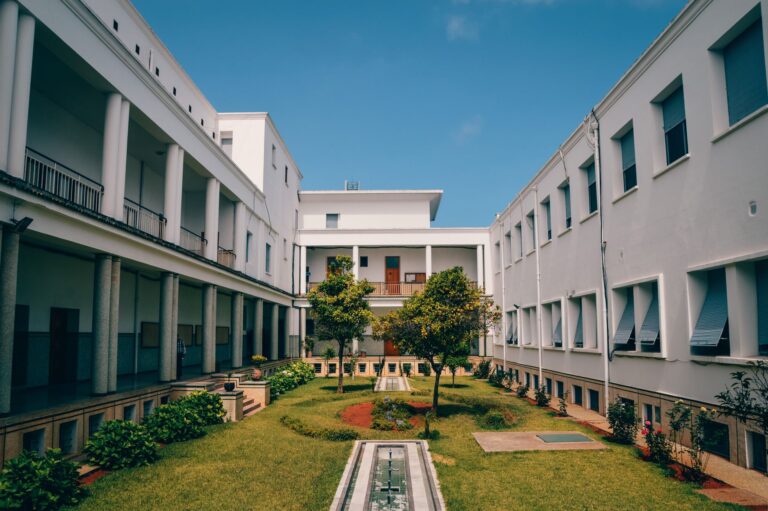
University of Granada – Study, Admission and Fees
Admission requirements, actual fees, language of study, housing and scholarships at the University of Granada for…
Scholarships in Spain
-

Erasmus Mundus Scholarship in Spain
Discover the Erasmus Mundus scholarship in Spain: €1,400 a month for joint master’s programmes across countries.…
-

Fundación Carolina Scholarship
Details of the 2026 Fundación Carolina scholarship for Latin American students: eligibility, funding, visa and how…
-

Master’s Scholarships in Spain
Discover master’s scholarships in Spain for 2026 through Erasmus Mundus and university schemes: requirements, funding, application…
Study in Spain guides
-
Daily Life as an International Student in Spain
A realistic guide to daily life as an international student in Spain: settling in, housing, transport,…
-

First Month in Spain: Checklist for International Students
A practical first-month-in-Spain checklist for international students: registration, enrolment, health insurance, TIE, banking and settling into…
-

Is Spain Safe for International Students?
Practical answers on whether Spain is safe for international students, with realistic tips on daily life,…
Thinking about studying in Serbia too?
-

Study in Serbia
Thinking about studying in Serbia in 2026? This guide covers tuition and living costs, top universities,…
-
Study in Spain or Serbia? Comparison 2026
Thinking of studying in Spain or Serbia? Compare 2026 tuition fees, language, work rules, residence after…