

The Spanish language year before university in Spain is a strategic option for international students who want academic and language preparation before starting a bachelor’s degree. This year gives you a chance to improve your Spanish, adapt to the Spanish education system, and settle into an academic environment. However, it is not an official qualification for entering university; it is a preparatory programme whose nature and accreditation are set by the organiser. Length, conditions and costs differ by organiser and region, and it may allow a study residence if the programme is one of the accepted types and the legal conditions are met.
🧮 Calculate your study cost in Spain in your own currency – official fees by region and university, housing and living costs (estimated) and scholarship eligibility in one minute: Study cost calculator
What is the Spanish language year before university?
The Spanish language year before university is a preparatory programme offered by accredited universities or educational centres in Spain, aimed at preparing foreign students, especially from outside the European Union, to continue to a bachelor’s degree in Spain. There is no single official pathway with this name; the term covers a variety of programmes (Spanish courses, or preparatory courses offered by higher-education institutions), and their nature, accreditation and the certificate awarded depend on the organiser.
This programme is ideal for international students who want to apply to a university in Spain but do not have a homologated (homologación) equivalent of their secondary certificate, or whose Spanish is not good enough. It does not replace university admission requirements, such as recognition of the secondary certificate or accreditation through UNEDasiss, depending on your situation.
Length and timetable of the Spanish language year
The length of these programmes and their start dates vary by organiser; they may run from a few weeks to a full academic year. The content usually focuses on Spanish and academic study skills, and the organiser decides the details of the curriculum.
The length of the permit matches the length of the study you are enrolled in, and you must prove admission and payment of the enrolment fees. When you apply for an extension you must prove that you are continuing your studies, and the extension matches the length of the study up to a maximum of one year; different rules may apply to language courses, so check the official page of the Ministry of Inclusion before planning.
Requirements to join the Spanish language year
To take the Spanish language year before university in Spain, the student must meet a set of legal and educational conditions, which vary slightly by organiser but include the following:
- Official admission to an accredited educational centre (an academy, a university or an accredited training centre).
- Proof of enrolment in the programme at an accredited centre, with the tuition fees paid.
- A passport valid for at least one year from the date of application.
- Public or private health insurance approved in Spain, covering the whole length of stay.
- A criminal record certificate issued within the past five years, authenticated and translated into Spanish.
- A medical certificate, if the consulate requests it.
- Authentication of foreign educational documents (such as the secondary school certificate) by apostille or official legalisation, with an official translation into Spanish.
Make sure the centre is officially authorised. For Spanish courses for foreigners, the Ministry of Inclusion’s instructions state that the academy must be accredited by the Instituto Cervantes (list of centres at acreditacion.cervantes.es). You can find the residence conditions on the website of the Ministerio de Inclusión: estancia por estudios.
Fees and costs of the Spanish language year
Tuition fees for the Spanish language year vary by region, organiser and the associated university. There is no single nationwide cost, but costs can be estimated from averages in the main regions.
In university programmes, fees are usually calculated by the number of credits (ECTS), and are set each year by each region and university. For preparatory programmes and language courses, the organiser sets its own fees, so ask the organiser directly for its official price list.
Fees at public universities are set by regional decisions that change every year, while private universities and centres set their fees independently.
In addition to tuition fees, the student must cover living costs, which are calculated according to the required financial means. According to the official page of the Ministry of Inclusion, the student must prove resources equal to 100% of the IPREM indicator per month (600 euros a month at the 2026 value), plus 75% for the first family member and 50% for each additional member. The student’s own 100% of IPREM is not required if you prove that housing is prepaid for the whole stay (Article 35 of RD 1155/2024).
Does the Spanish language year give a study residence?
It may, depending on the type of programme and the organiser. RD 1155/2024 (Articles 52–59) regulates the permit to stay for study for more than 90 days for those admitted to an authorised educational centre in a full-time programme, and the Ministry’s instructions indicate that this is estimated at about 20 hours a week at least. The instructions state that Spanish courses for foreigners must be offered by academies accredited by the Instituto Cervantes, and they also cover preparatory courses offered by higher-education institutions. Details may change, so check the official page and the consulate.
Not every language programme qualifies for residence; you must check the organiser’s accreditation and that the programme is full time. You need to enrol in the programme and pay the fees, then apply for the visa at the Spanish embassy or consulate in your country of residence at least two months before the start of your studies.
You can apply for the visa at the Spanish consulate in the student’s country, paying the visa fee set by the consulate. After arrival, the student must apply in person for the foreigner identity card (TIE) at the competent police station within one month.
Work rights while studying
The permit automatically gives the right to work up to 30 hours a week for postgraduate students (Article 57 of RD 1155/2024), provided the work is compatible with the studies. In other programmes, including language courses alone, this right is not assumed automatically, and a separate work authorisation usually has to be requested.
Where this right applies, the work must be within the autonomous community where the student lives (and neighbouring towns). It is advisable to keep to the maximum hours so that your academic performance is not affected.
Moving on to a bachelor’s degree after the language year
After completing the Spanish language year, the student is not given a homologated equivalent of the secondary certificate, but becomes eligible to apply for bachelor’s programmes at Spanish universities, provided the following conditions are met:
- Obtain a certificate from the organiser confirming that you completed the programme successfully.
- Depending on the country of your certificate, recognition of the secondary certificate (homologación) through the Spanish Ministry of Education may be needed (form 790, code 079); check your own case.
- Obtain UNEDasiss accreditation for university admission where it applies to your certificate, with the possibility of taking the specific competence tests (PCE) at UNED, which may add up to 4 points to the admission score. UNEDasiss is not an equivalent of the secondary certificate.
- Apply through the channels set by each region and university for admission, and follow their rules.
In some regions, joint admission procedures let you apply to several universities in one application; check the mechanism in the region you are targeting.
For more information about registration and applying, you can read the admission requirements for Spanish universities.
Where to check the official rules
Residence rules for study stays can change, and each programme is judged on its own accreditation and weekly hours. Before paying any fees, read the Ministry of Inclusion’s official page on stays for study (source) and confirm the details of your case with the Spanish consulate that covers your place of residence.
For Spanish courses for foreigners, also check that the academy appears on the Instituto Cervantes list of accredited centres (acreditacion.cervantes.es), and ask the organiser in writing whether the programme is full time and which certificate it issues at the end.
Frequently asked questions
Can I study in Spain without a homologated secondary certificate?
It depends on the country of your certificate. Recognition of the secondary certificate (homologación) through the Spanish Ministry of Education or accreditation through UNEDasiss may be needed, depending on the case, and the language year alone does not replace this.
What is the approximate cost of the language year in Spain?
There is no single cost; it varies greatly by organiser, region and length of programme, so ask the organiser directly for its official price list.
Can I work during the language year?
The automatic right to work up to 30 hours a week applies to postgraduate studies, while language courses alone usually need a separate work authorisation.
Does the language year give a study residence?
It may, if the programme is one of the accepted types, the organiser is accredited, and enrolment and payment are proven. A study residence is then granted, and the TIE card is requested after arrival.
How long does it take to receive the visa?
The maximum time for a visa decision is one month from the date the application is submitted to the consulate. It is advisable to apply early.
The Spanish language year before university in Spain is a decisive step for international students who want to enter the Spanish education system. It is a chance to improve your language, prepare academically and integrate culturally, with the possibility of a study residence if the programme meets the conditions. With good planning, this year can become a successful gateway to a bachelor’s degree in Spain. Be sure to review the specific conditions of each university or centre offering the programme, and start preparing early to make sure your application succeeds.
Official sources
- Ministerio de Inclusión: estancia por estudios
- BOE: Real Decreto 1155/2024
- Instituto Cervantes: centros acreditados
More study levels
-
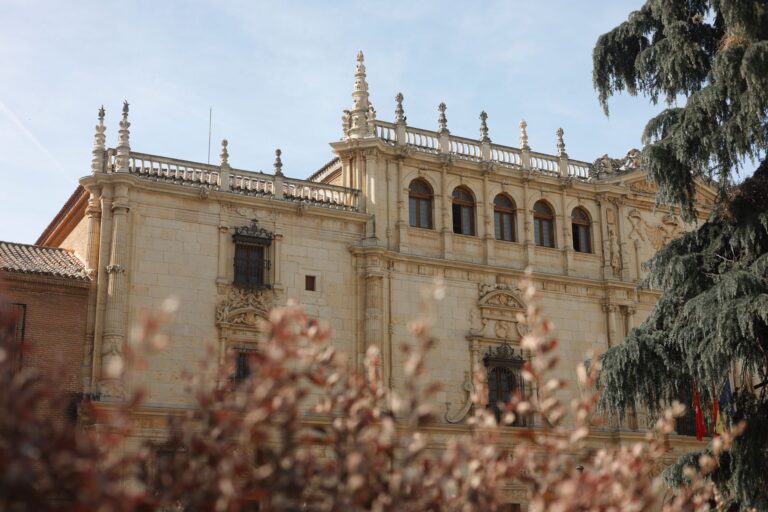
Bachelor’s Degree (Grado) in Spain
Everything international students need to know about a bachelor’s degree (Grado) in Spain: length, admission requirements,…
-

Master’s in Spain: Official vs Private
Official vs private master’s in Spain in 2026: length, fees, study residence permit and admission requirements…
-

PhD in Spain for International Students
Everything you need to know about a PhD in Spain: duration, admission requirements, costs and your…
-

Vocational Education (FP) in Spain for International Students
Everything about vocational education (FP) in Spain 2026: length of study, admission requirements, fees, and when…
Universities in Spain
-
Comillas Pontifical University – Study, Admission and Fees
Admission requirements, tuition fees, language of study, housing and scholarships at Comillas Pontifical University in Madrid,…
-
Complutense University of Madrid – Study, Admission and Fees
Admission requirements at Complutense University of Madrid for non-EU students, actual fees, language of study, housing…
-
European University of Madrid – Study, Admission and Fees
Admission for international students, fee information, language of study, housing and scholarships at the European University…
Scholarships in Spain
-

Can You Study in Spain for Free?
Can you study in Spain for free? The truth: public fees are low for residents, scholarships…
-

Erasmus Mundus Scholarship in Spain
Discover the Erasmus Mundus scholarship in Spain: €1,400 a month for joint master’s programmes across countries.…
-

Fundación Carolina Scholarship
Details of the 2026 Fundación Carolina scholarship for Latin American students: eligibility, funding, visa and how…
Study in Spain guides
-
Daily Life as an International Student in Spain
A realistic guide to daily life as an international student in Spain: settling in, housing, transport,…
-

First Month in Spain: Checklist for International Students
A practical first-month-in-Spain checklist for international students: registration, enrolment, health insurance, TIE, banking and settling into…
-

Is Spain Safe for International Students?
Practical answers on whether Spain is safe for international students, with realistic tips on daily life,…
Thinking about studying in Serbia too?
-

Study in Serbia
Thinking about studying in Serbia in 2026? This guide covers tuition and living costs, top universities,…
-

Study in Spain or Serbia? Comparison 2026
Thinking of studying in Spain or Serbia? Compare 2026 tuition fees, language, work rules, residence after…