

A bachelor’s degree (Grado) in Spain is the first academic degree. The standard workload is 240 ECTS (four years), with some degrees at 300 or 360 ECTS, at an approved university. It is an ideal choice for international students who want a recognised qualification in Europe, with the option of applying for a job-search residence permit of up to 24 months after graduation (work is not allowed during it). Length, costs and admission requirements vary by administrative region (autonomous community) and university, but all are governed by the national and European Union legal framework.
🧮 Calculate your study cost in Spain in your own currency – official fees by region and university, housing and living costs (estimated) and scholarship eligibility in one minute: Study cost calculator
Length of a bachelor’s degree (Grado) in Spain
Most bachelor’s degrees (Grado) in Spain last 4 years (240 ECTS) under Royal Decree 822/2021, and some are 300 or 360 ECTS (such as medicine: 6 years). Arts and law degrees are not usually taught in 3 years.
- Medicine: 6 years (360 ECTS)
- Most other degrees, such as engineering, law, humanities and social sciences: 4 years (240 ECTS)
- Some degrees: 300 ECTS (about 5 years), depending on the study plan
Time is calculated from the number of credits (créditos ECTS): a bachelor’s degree usually requires 240 ECTS, and some degrees 300 or 360 ECTS. Most programmes are taught over two semesters a year, with annual or cumulative enrolment possible.
Requirements to apply for a bachelor’s degree in Spain
To apply for a bachelor’s programme in Spain, a set of official requirements must be met, especially for non-EU students. Some requirements vary depending on the education system in the student’s country.
- Academic qualification: a secondary school certificate (Bachillerato) or its equivalent. Many international students need homologation of their secondary certificate (homologación) with the Spanish Ministry of Education.
- Language: most programmes are taught in Spanish, so proof of proficiency is required, such as a DELE certificate (Diploma de Español como Lengua Extranjera) or proof of study at a Spanish school.
- Student visa: to stay for more than 90 days you must apply for a study visa (visado de estudios) at the Spanish consulate before travelling.
- Health insurance: you must have public or private health insurance with an insurer approved in Spain.
- Medical certificate: requested to confirm the absence of infectious diseases or health risks.
- Criminal record: required for students planning to stay more than 180 days, covering the last five years.
- Official documents: academic certificates must be legalised with an Apostille or official legalisation, with an official translation into Spanish.
Students coming from education systems in the European Union or from countries with reciprocal agreements (article 6 of Royal Decree 534/2024) can apply without homologation, while most other international students (including those from Morocco and Tunisia) need the secondary certificate homologation process (homologación) through the Spanish Ministry of Education, using form 790 code 079 (about 49.76 euros).
Costs of a bachelor’s degree (Grado) in Spain
Tuition fees in Spain vary by administrative region (autonomous community) and by university (public or private). Public universities charge relatively low fees, while private universities are among the most expensive in Europe.
Fees at public universities
Fees at public universities are set by each autonomous community and depend on the number of credits (ECTS). Fees are calculated per 1 ECTS and differ from region to region.
| Region | Fee/ECTS (first year) | Annual fee (60 ECTS) | Notes |
|---|---|---|---|
| Madrid | 16.92 EUR | 1,015.20 EUR | For experimentality level 3, such as business administration, these are the prices for residents and EU students; a non-EU student without residence pays more (≈6,823–8,186 euros per 60 ECTS) |
| Catalonia | 17.69 EUR | 1,061.40 EUR | Prices vary between Catalan public universities, and non-EU students without residence may be charged the full cost (for example UPC 30 euros/credit; UPF about 6,800.32 euros for the first year) |
| Andalusia | 12.62 EUR (basic) | ≈757 EUR (60 ECTS) | The university may charge a surcharge to non-EU students |
Fees at public universities do not include accommodation, transport or living costs. A non-EU student without residence may also pay more than the figures above (in Valencia roughly double, and in Castilla y León no surcharge: 10.41–18.45 euros per credit). A monthly budget of 800 to 1,200 euros is recommended, depending on the city.
Fees at private universities
Private universities in Spain charge much higher fees, ranging from 3,000 to 15,000 euros a year, depending on the subject and university. They include programmes such as medicine, business administration and engineering.
- Medicine: 10,000–15,000 EUR/year
- Business administration: 5,000–10,000 EUR/year
- Engineering: 6,000–9,000 EUR/year
Students can apply for partial scholarships or discounts based on academic performance or financial situation.
Residence and student visa in Spain
Non-EU students who want to study in Spain for more than 90 days need a long-stay visa (autorización de estancia de larga duración por estudios). It is issued by the Spanish embassy or consulate in the student’s country.
- Length of stay: set according to the length of the studies and usually renewed by proving continued enrolment and academic progress.
- Fees: they vary by country and consulate, so check with the competent consulate.
- Decision time: no more than one month from the date of application if the application is complete.
- Registration after arrival: you must register at the police office (Policía Nacional) within one month of entering Spain to receive your residence card (TIE).
A study residence permit allows students to work during their studies, provided the hours do not exceed 30 a week, and within the autonomous community where they live, plus neighbouring localities.
Working while studying in Spain
Students with a study visa in Spain are legally allowed to work without needing an additional permit, provided the work is compatible with the aims of the studies.
- Maximum: 30 hours a week.
- Area: the work must be within the autonomous community where the student lives (such as Madrid or Catalonia), plus neighbouring localities.
- Work in internships: no additional permit is required if it is part of the academic programme (internado curricular).
Work is an important part of the student experience, as it helps improve language skills and increase monthly income.
Funding and financial support for international students
Spain offers financial support programmes for non-EU students, but they are limited compared with other countries. Students can apply for:
- Financial support from universities: some universities offer partial scholarships or fee discounts.
- Government scholarships: such as those of the Spanish Ministry of Education, but these are usually awarded to outstanding students.
- Self-funding: you must prove sufficient financial resources to support life in Spain.
Students must prove financial resources covering 100% of the monthly IPREM (600 euros/month), i.e. 7,200 euros a year, plus 75% for the first family member and 50% for each additional one. The student’s own 100% of the IPREM is not required if you prove that housing has been paid in advance for the entire stay (article 35 of RD 1155/2024).
Practical steps to apply for a bachelor’s degree in Spain
Here are the basic steps to follow to join a bachelor’s programme in Spain:
- Choose the right university and subject based on the field and location.
- Check whether homologation (homologación) of your secondary certificate is required.
- Request UNEDasiss accreditation when the university requires it (this is an accreditation, not admission), then apply for admission through the university or regional platform (preinscripción).
- Complete the PCE tests through UNEDasiss if the university requires them; they can raise your admission score up to a maximum of 14.
- Gather the required documents: secondary certificate, official translation, language certificate, health insurance, criminal record certificate.
- Submit the visa application at the Spanish consulate.
- Travel to Spain and register at the police office to receive your residence card (TIE).
- Enrol at the university and start your studies.
Frequently asked questions
Can I study in Spain without homologation of my secondary certificate?
No, most international students need homologation of their secondary certificate (homologación) with the Spanish Ministry of Education, unless it is recognised under international education agreements.
What are the monthly living costs in Spain?
Monthly costs range from 800 to 1,200 euros, depending on the city. They include housing, food, transport and health insurance.
Can I work in Spain while studying?
Yes, students are allowed to work up to 30 hours a week, provided it does not interfere with their studies. No additional permit is required.
What is the minimum income required to prove financial means?
You must prove 600 euros a month (7,200 euros a year), plus 75% for the first family member and 50% for each additional one.
How long is the student visa in Spain?
The length of stay is set according to the length of the studies and is usually renewed by proving continued enrolment and academic progress.
A bachelor’s degree (Grado) in Spain is an excellent choice for international students who want a recognised academic qualification in Europe, with the option of applying for a job-search residence permit after graduation. Costs and length vary by region and university, but the legal framework is clear and transparent. Check the specific requirements of each university, and start preparing early to secure your admission and your student visa. Start your journey towards a successful academic future in Spain now.
Official sources
- Ministerio de Inclusión: estancia por estudios
- Comunidad de Madrid: precios públicos universitarios
- BOE: Real Decreto 822/2021 (organización de las enseñanzas universitarias)
- BOE: Real Decreto 534/2024 (acceso a la universidad)
More study levels
-
Master’s in Spain: Official vs Private
Official vs private master’s in Spain in 2026: length, fees, study residence permit and admission requirements…
-

PhD in Spain for International Students
Everything you need to know about a PhD in Spain: duration, admission requirements, costs and your…
-

Spanish Language Year Before University in Spain
Everything about the Spanish language year before university in Spain: length, requirements, costs, whether it gives…
-
Vocational Education (FP) in Spain for International Students
Everything about vocational education (FP) in Spain 2026: length of study, admission requirements, fees, and when…
Universities in Spain
-
Ramon Llull University (Esade) – Study, Admission and Fees
Admission, first-year tuition fees, language of instruction, housing and scholarships at Ramon Llull University (Esade) in…
-
University of Barcelona – Study, Admission and Fees
Admission requirements at the University of Barcelona for international students, actual tuition fees, language of study,…
-
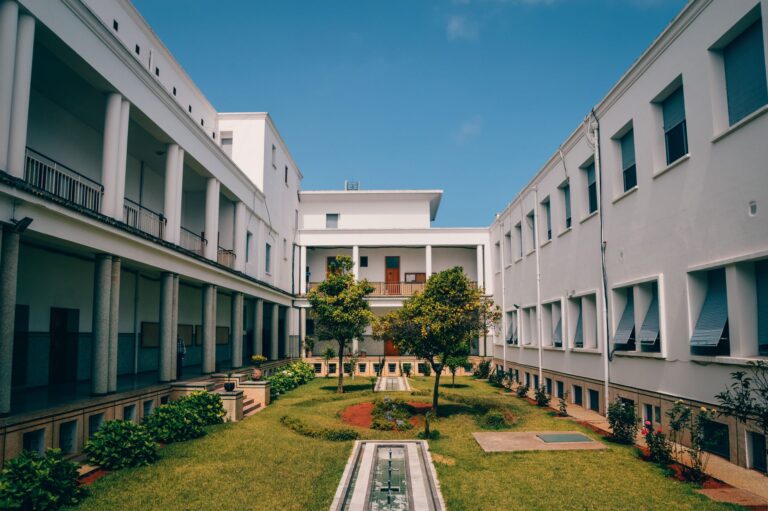
University of Deusto – Study, Admission and Fees
Everything you need to know about the University of Deusto in Bilbao: admission for international students,…
Scholarships in Spain
-

Master’s Scholarships in Spain
Discover master’s scholarships in Spain for 2026 through Erasmus Mundus and university schemes: requirements, funding, application…
-

Spanish Government AECID Scholarship
Everything about the Spanish government AECID scholarship 2026 for international students: conditions, funding, duration and visa…
-

Spanish Government Grants for Residents (Becas MEC)
Everything you need to know about the Spanish government grants for residents (Becas MEC) in 2026:…
Study in Spain guides
-

First Month in Spain: Checklist for International Students
A practical first-month-in-Spain checklist for international students: registration, enrolment, health insurance, TIE, banking and settling into…
-

Is Spain Safe for International Students?
Practical answers on whether Spain is safe for international students, with realistic tips on daily life,…
-
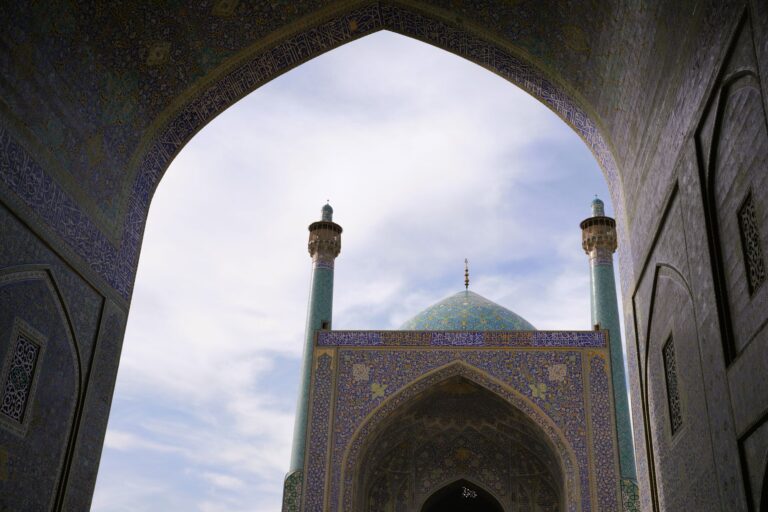
Muslim Student Life in Spain
A practical guide to Muslim student life in Spain, from academic enrolment to living peacefully with…
Thinking about studying in Serbia too?
-

Bachelor’s Degree in Serbia
Everything you need to know about a bachelor’s degree in Serbia: admission requirements, costs, duration and…
-

Study in Serbia
Thinking about studying in Serbia in 2026? This guide covers tuition and living costs, top universities,…
-

Study in Spain or Serbia? Comparison 2026
Thinking of studying in Spain or Serbia? Compare 2026 tuition fees, language, work rules, residence after…