

Studying architecture in Spain is an excellent choice for international students who want to develop their architectural design skills in a global learning environment that combines rich architectural heritage with modern innovation. The experience varies by university, language of instruction and specialisation, but architecture remains one of the most sought-after fields at Spanish universities, especially in major cities such as Madrid, Barcelona and Valencia. If you are considering a bachelor’s or master’s programme in architecture in Spain, this comprehensive guide explains admission requirements, language of instruction, recognised universities, and the costs of study and living for 2026.
🧮 Calculate your study cost in Spain in your own currency – official fees by region and university, housing and living costs (estimated) and scholarship eligibility in one minute: Study cost calculator
Studying Architecture in Spain: Language of Instruction and Basic Requirements
To practise as an architect in Spain, you usually complete a Grado en Fundamentos de la Arquitectura of 300 ECTS, followed by a professionally qualifying master’s degree (Máster en Arquitectura) under the conditions of Ministerial Order Orden EDU/2075/2010; the bachelor’s degree alone is not enough for professional qualification. The Universidad de Navarra, for example, offers Estudios de Arquitectura of 300 ECTS.
Most architecture bachelor’s programmes in Spain are taught in Spanish, which means students need a sufficient command of the language to succeed academically. Master’s-level programmes are sometimes offered in English, but they are still rare compared with programmes taught in Spanish.
So if you come from outside Spain, a good command of Spanish is a basic requirement for admission to most universities. You will often be asked for proof of language level such as the DELE (Diploma de Español como Lengua Extranjera) or an equivalent. Language requirements vary by university, and universities often ask for level B2 or higher.
In addition to language, students must meet a set of official requirements to be enrolled on a recognised programme. The main ones are: a valid passport, health insurance accepted in Spain, a criminal record certificate, a medical certificate, sufficient financial means, plus an official translation and legalisation of foreign academic documents, with details to be checked with the relevant consulate.
For more details on how to complete these procedures, see admission requirements in Spain and learn the enrolment requirements step by step.
Leading Universities for Studying Architecture in Spain
Spain is one of the European countries with specialised architecture schools, and some of them rank among the best universities in Europe. Notable universities offering strong architecture programmes include:
- Technical University of Madrid (Universidad Politécnica de Madrid – UPM): a public university with a school of architecture (ETSAM); check its website and the RUCT register for the degrees and master’s programmes currently available.
- Polytechnic University of Catalonia (Universitat Politècnica de Catalunya – UPC): a public university (not the University of Barcelona) with architecture schools in Barcelona and Sant Cugat; check its website for programmes.
- University of Alcalá (Universidad de Alcalá): a public university with a school of architecture; check the current degree and its study plan in the RUCT.
- University of Navarra (Universidad de Navarra): a private university offering Estudios de Arquitectura of 300 ECTS, with first-year fees for 2026-27 of about €17,300.40.
- Polytechnic University of Valencia (Universitat Politècnica de València): a public university with a school of architecture (not the Universitat de València); check its website for programmes.
If you are looking for a comparison between these universities or want to see the available specialisations, see the best universities in Spain and pick the option that suits you best.
Admission Requirements for Architecture Programmes for Non-EU Students
Admission requirements for architecture programmes depend on the education system of the student’s home country. A foreign secondary-school certificate may need to be homologated (homologación) to the Spanish Bachillerato through the Ministry of Education, while UNEDasiss provides academic accreditation and organises the PCE tests for university access; procedures differ depending on the country of the certificate.
Homologation is requested through the Ministry of Education, Vocational Training and Sports by paying form 790 (code 079), which costs about €49.76. UNEDasiss, for its part, issues the academic accreditation for university access and organises the PCE tests; it does not carry out homologation.
After receiving the assessment, the student can apply for admission to a university through the unified registration system, especially in regions such as Madrid, where the major universities (such as Universidad Autónoma, Universidad Complutense and Universidad Carlos III) are managed within a single admission district.
If you come from outside the European education system, you may be required to sit the Pruebas de Competencias Específicas (PCE) organised by UNED, which can raise your admission score by up to 4 points, depending on the rules of the university you apply to.
Tuition Fees and Cost of Studying in Spain 2026
Tuition fees for architecture programmes vary widely depending on the type of university (public or private) and the specialisation. At public universities each autonomous community sets the price per credit; a non-EU student without residence in Madrid pays about €6,823–8,186 per 60 ECTS, and fees in Catalonia can reach the full cost (for example, about €30 per credit at UPC). At private universities, first-year fees for Estudios de Arquitectura at the Universidad de Navarra were €17,300.40 for 2026-27, and IE University announced €28,020 for the Bachelor in Architectural Studies for 2027-28.
In addition to tuition, students must set aside a monthly amount for living costs. According to IPREM 2026 (Indicador Público de Renta de Efectos Múltiples), non-EU students must show financial resources estimated at €600 per month (€7,200 per year), plus 75% of IPREM (€450 per month) for the first family member and 50% (€300) for each additional member.
The student’s own 100% of IPREM is not required if they show that housing has been paid in advance for the whole length of stay (article 35 of RD 1155/2024). Visa fees vary by consulate and nationality, so check the website of the relevant consulate.
The table below summarises the main costs for 2026:
| Item | Amount (EUR) |
|---|---|
| Tuition (public university, 60 ECTS, non-EU student without residence in Madrid) | approx. 6,823 – 8,186 |
| Tuition (Universidad de Navarra, Estudios de Arquitectura, first year 2026-27) | 17,300.40 |
| Health insurance (annual) | Varies by provider and coverage |
| Monthly rent | Varies by city |
| Monthly costs (food, transport, getting around) | Vary by lifestyle |
| Visa fees | Vary by consulate |
| Minimum financial means for the student (12 × 600) | 7,200 |
For accurate fee information at each university, we recommend visiting the university’s official website or contacting its admissions office directly.
Residence and Visa: Procedures for Studying in Spain
To obtain a study visa for Spain, the student must apply through the Spanish consulate in your country and submit all required documents: an admission letter from the university, health insurance, proof of financial resources, and proof of enrolment at a recognised educational centre.
Once approved, the student is granted a “long-stay” authorisation (autorización de estancia de larga duración por estudios), whose length is tied to the length of the study programme and subject to the renewal conditions set by the administration. Studies may last more than 4 years: the Fundamentos de la Arquitectura degree is 300 ECTS and is followed by a qualifying master’s.
After arriving in Spain, the student must register at the police office (Oficina de Extranjería) within one month of entry and obtain the “TIE” card (Tarjeta de Identidad de Extranjero), an official residence card that is an essential document for living and working.
It is worth noting that international students are allowed to work while studying, provided the hours do not exceed 30 per week within the autonomous community where the student lives (with the possibility of working in neighbouring towns), and the work must be compatible with the studies. Work in academic internships (prácticas curriculares) is also allowed without an additional work permit.
Frequently Asked Questions
Can I study architecture in Spain without speaking Spanish?
In most cases, no, especially for bachelor’s programmes. Most programmes are taught in Spanish and proof of at least B2 is required. Master’s programmes may be offered in English, but they are rare and need to be verified with the university.
Which universities offer architecture programmes in English?
Some universities may offer master’s degrees in related fields in English, but the master’s that qualifies you to practise as an architect is mostly taught in Spanish. Check the university’s official website and the RUCT register before applying.
Can I apply to study in Spain without health insurance?
No. Health insurance approved by the official authorities in Spain is a mandatory requirement for the visa application. Insurance from companies outside Spain is accepted only if it is approved by the Spanish authorities.
How long is the study visa for Spain?
The length of stay for study is tied to the length of the academic programme; renewal is required, together with proof that you are continuing your studies, under the administration’s conditions.
Can I stay in Spain after graduating?
Graduates at EQF level 6 or above can apply for a residence permit to look for work or to start a business, for up to 24 months, non-renewable; working is not allowed during this period.
Studying architecture in Spain is a golden opportunity for international students who want to develop their design and architecture skills in an advanced, culturally rich learning environment. By understanding the admission requirements, language requirements and costs, you can plan a successful study journey in one of Europe’s leading countries in this field. Do not hesitate to explore fields of study in Spain for your other options, and make your decision based on accurate, reliable information for 2026.
Invest in your future by studying architecture in Spain, where long-standing architectural heritage meets contemporary innovation. Start your journey today, with full support from international education experts to help you succeed academically and professionally.
Official Sources
- Comunidad de Madrid: acceso desde estudios extranjeros
- BOE: Orden EDU/2075/2010 (títulos que habilitan para Arquitecto)
- BOE: Real Decreto 822/2021
- Universidad de Navarra: precios de primer curso
- IE University: tuition fees 2027-28
More subjects
-

Study Media in Spain
A complete 2026 guide to studying media in Spain: admission requirements, language of study, leading universities,…
-

Study Medicine in Spain
Everything international students need to know about studying medicine in Spain: admission requirements, language, universities, costs…
-

Study Nursing in Spain
Everything you need to know about studying nursing in Spain: admission requirements, language, recommended universities, costs…
-

Study Pharmacy in Spain
Learn everything you need to study pharmacy in Spain: admission requirements, language, universities, tuition fees and…
-

Study Psychology in Spain
Everything you need to know about studying psychology in Spain: admission requirements, language of study, universities,…
-

Studying Tourism and Hospitality in Spain
Everything you need to know about studying tourism and hospitality in Spain in 2026: admission requirements,…
Universities in Spain
-
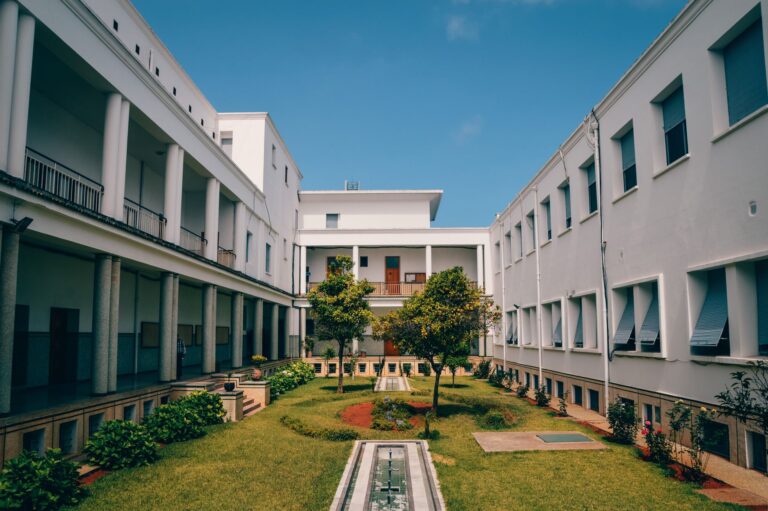
University of Granada – Study, Admission and Fees
Admission requirements, actual fees, language of study, housing and scholarships at the University of Granada for…
-

University of Málaga – Study, Admission and Fees
Learn about University of Málaga admission requirements for international students, actual tuition fees, language of study,…
-

University of Navarra – Study, Admission and Fees
Learn about University of Navarra admission requirements for international students, real tuition fees, language of study,…
Scholarships in Spain
-
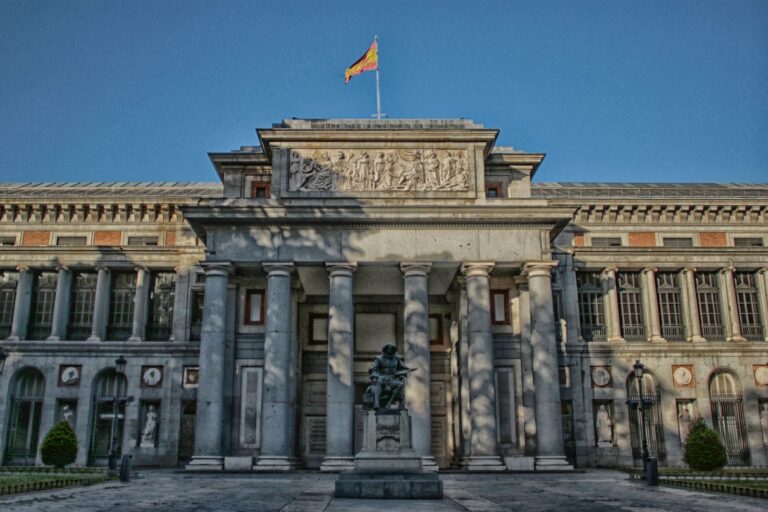
Can You Study in Spain for Free?
Can you study in Spain for free? The truth: public fees are low for residents, scholarships…
-

Erasmus Mundus Scholarship in Spain
Discover the Erasmus Mundus scholarship in Spain: €1,400 a month for joint master’s programmes across countries.…
-

Fundación Carolina Scholarship
Details of the 2026 Fundación Carolina scholarship for Latin American students: eligibility, funding, visa and how…
Study in Spain guides
-
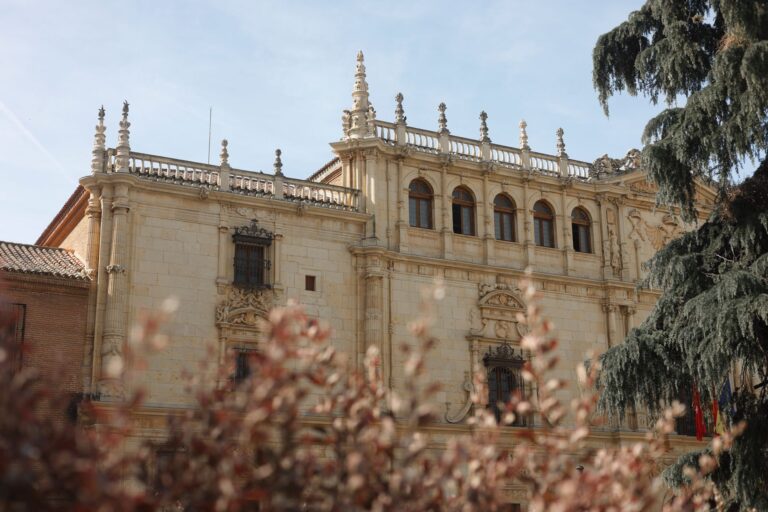
Daily Life as an International Student in Spain
A realistic guide to daily life as an international student in Spain: settling in, housing, transport,…
-

First Month in Spain: Checklist for International Students
A practical first-month-in-Spain checklist for international students: registration, enrolment, health insurance, TIE, banking and settling into…
-

Is Spain Safe for International Students?
Practical answers on whether Spain is safe for international students, with realistic tips on daily life,…
Thinking about studying in Serbia too?
-

Study Architecture in Serbia
Everything you need to know about studying architecture in Serbia: English-taught options, tuition fees, admission requirements,…
-

Study in Serbia
Thinking about studying in Serbia in 2026? This guide covers tuition and living costs, top universities,…
-
Study in Spain or Serbia? Comparison 2026
Thinking of studying in Spain or Serbia? Compare 2026 tuition fees, language, work rules, residence after…