

Studying psychology in Spain is an excellent choice for international students looking for high-quality higher education, a balanced study environment and wide professional opportunities. Admission requirements vary by university and field, but they revolve around enrolment on a state-approved programme, submitting official documents, and meeting financial and health requirements. Most bachelor’s programmes are taught in Spanish, while master’s programmes are offered in Spanish or English depending on the university. If you are thinking of joining a psychology programme in Spain, this comprehensive guide covers everything you need to know about universities, fees, admission requirements and legal procedures for 2026.
🧮 Calculate your study cost in Spain in your own currency – official fees by region and university, housing and living costs (estimated) and scholarship eligibility in one minute: Study cost calculator
Admission requirements for studying psychology in Spain
Admission requirements for studying psychology in Spain vary by university and level of study, but they usually require completing secondary school (Bachillerato) or its equivalent, with confirmation that the student is enrolled on an approved programme. Non-European students need official recognition of their secondary school certificate (homologación) as part of the process.
The first step is to apply for recognition (homologación) of your secondary school certificate from the Spanish Ministry of Education. This is an essential requirement for entering bachelor’s programmes in Spain, and applies to most countries outside the EU that have no educational exchange agreements with Spain. The application is submitted to the Spanish Ministry of Education with payment of a fee using form 790 code 079 (about 49.76 €), then the academic accreditation is obtained through UNEDasiss, which does not grant university admission.
After recognition and accreditation, the student can register for the Pruebas de Competencias Específicas (PCE) organised by UNED to raise their admission score, and the requirements of each university and region (including the Madrid region) should be checked. The student can gain up to 4 extra points through these tests, which improves admission chances at prestigious universities.
Admission requirements vary by university, but major universities such as Universidad Complutense de Madrid, Universidad Autónoma de Madrid and Universidad Carlos III de Madrid offer psychology programmes; we do not state admission scores without an official source carrying the year, so check the universities’ official websites. A good overall average in the secondary certificate is usually required, with emphasis on skills in science and Spanish.
If you are looking for details on how to apply, see admission requirements in Spain, which gives comprehensive information on the procedures and documents required.
Language of study in psychology programmes
Most bachelor’s programmes in psychology in Spain are taught in Spanish, which means the student must have a good level of Spanish before joining the programme. Proof of language proficiency is usually required through a certificate such as DELE (Diploma de Español como Lengua Extranjera), at level B2 at least.
As for master’s programmes, some universities offer them in English, especially universities seeking to attract international students. English-taught master’s programmes are available at some universities, but we have not confirmed specific programmes in psychology; check the declared language of each programme on the official website. According to the official page of the Universidad de Granada, the master’s that qualifies for the profession (see below) is taught in Spanish and in person.
Important for anyone who wants to practise health psychology: a bachelor’s degree in psychology alone does not qualify you to work in the healthcare sector. Under Law 33/2011 (Annex VII), the title of “Psicólogo General Sanitario” requires the psychology degree plus the official Master’s in General Health Psychology (Máster en Psicología General Sanitaria, for example 90 ECTS at the Universidad de Granada), with at least 180 ECTS of health-related content across the degree and master’s. Working at centres belonging to the National Health System requires the title of clinical psychology specialist. We have not verified the rules for foreigners practising or for recognition in your country, so check with the competent authorities. We recommend learning Spanish before you travel.
If you are looking for universities that teach psychology in English, you can browse the best universities in Spain and compare the available options.
Best universities teaching psychology in Spain
Spain is one of the leading countries in psychological studies in Europe, with universities offering psychology programmes of high quality and an advanced academic environment. Here are the main universities teaching psychology with approved programmes:
| University | Location | Language of study | Programme length (bachelor’s) | Notes |
|---|---|---|---|---|
| Universidad Complutense de Madrid (UCM) | Madrid | Spanish | 4 years | Large public university in Madrid |
| Universidad Autónoma de Madrid (UAM) | Madrid | Spanish | 4 years | Public university in Madrid; check the programme on its website |
| Universidad Carlos III de Madrid (UC3M) | Madrid | Check the official website | — | We have not confirmed that this university offers a bachelor’s degree in psychology; check its website before relying on it |
| Universitat de Barcelona (UB) | Barcelona | Check the language of each programme | 4 years | Public university in Catalonia; we have not confirmed an English-taught master’s in psychology |
| Universidad Pompeu Fabra (UPF) | Barcelona | Check the language of each programme | Check the official website | We have not confirmed the psychology programme and its language; check the university’s (UPF) website before relying on it |
The universities in Madrid (such as UCM, UAM, UC3M) are treated as a single admission district, which means the student can apply to several universities within the same system. Universities in Barcelona are subject to Catalonia’s own admission procedures; check each university’s website.
Costs of studying a psychology programme in Spain
Tuition fees for studying psychology in Spain vary by type of university (public or private), city and level of study. Public universities are much cheaper than private universities, but offer high educational quality.
Fees are calculated per ECTS credit and vary by region, and may be higher for non-resident non-European students. In Madrid they pay the fourth-enrolment price: 136.44 / 128.57 / 113.71 € per ECTS depending on the level (about 6,823 € per 60 ECTS at level 3), and for a master’s that does not qualify for a profession about 84.07 € per ECTS. In Catalonia the general price is 17.69 € per credit, but universities may raise it for non-Europeans (UPC 30 €, UPF about 6,800.32 € for the first year 2026-27). In Valencia it is double the base price of the first enrolment, in Andalusia 12.62 € per credit as a base, and in Castilla y León 10.41 to 18.45 € per credit. Private universities are much more expensive and announce their prices on their websites.
In addition to tuition fees, the student must cover living costs, which vary by city. Monthly costs vary by city and type of accommodation, and include housing, food, transport and health insurance; we do not state a fixed figure without an official source.
Non-European students are required to prove sufficient financial resources for study, under the long-term residence rules. Under the IPREM 2026, you must prove 600 € per month (7,200 € per year), plus 75% for the first family member and 50% for each additional one. The student’s own 100% of the IPREM is not required if you prove that housing has been paid in advance for the whole period of stay (Article 35 of RD 1155/2024).
You can learn more about costs and fees through fields of study in Spain, which gives comprehensive information on costs by specialisation.
Legal procedures for residence and visa
To study psychology in Spain, a non-European student needs a long-stay residence visa (autorización de estancia de larga duración por estudios) if planning to stay for more than 90 days. This visa is issued by the Spanish embassy or consulate in the student’s country, and requires official documents.
The basic visa requirements include:
- A passport valid for at least one year.
- Proof of admission to an accredited university.
- Proof of enrolment at an approved educational centre (official enrolment at the university).
- Private or public health insurance approved in Spain.
- A criminal record certificate issued within the last five years.
- A medical certificate proving the absence of infectious diseases.
- Legalisation of foreign documents (Legalización or Apostilla) with an official translation into Spanish.
After the student arrives in Spain, they must apply for the TIE (Tarjeta de Identidad de Extranjero) within one month of entry, at the local police office. The TIE is an official residence document, and is necessary for work and for registering with public services.
Students are allowed to work part-time during their studies, up to a maximum of 30 hours per week, and within the autonomous community where they study (plus neighbouring localities) under Article 57 of RD 1155/2024. Work in academic internships (prácticas curriculares) is also allowed without needing an additional authorisation.
The visa application must be submitted in advance, and the decision process takes up to one month from the date the application is submitted. The competent Spanish consulate sets the visa fee, and it may vary by country; check its website.
Free consultation: a first step towards studying psychology in Spain
Frequently asked questions
Can I study psychology in Spain without certificate recognition?
No, you cannot enrol on bachelor’s programmes in psychology in Spain without recognition of your secondary school certificate (homologación), especially for students from countries without educational agreements with Spain. Recognition is done through the Ministry of Education, then academic accreditation through UNEDasiss (which does not grant admission by itself), and it is preferable to complete both before pre-registering at the university.
What are the monthly costs of studying psychology in Spain?
Monthly costs vary by city and type of accommodation, and include housing, food, transport and health insurance, and are usually higher in Madrid and Barcelona; we do not state a fixed figure without an official source.
Can I work while studying in Spain?
Yes, non-European students are allowed to work part-time during their studies, up to a maximum of 30 hours per week, and within the autonomous community where they study (and neighbouring localities). Work in academic internships is also allowed without needing an additional authorisation.
Which universities teach psychology in English?
Some universities may offer master’s programmes in psychology in English, but we have not confirmed specific programmes; check each university’s official website. The master’s that qualifies for the health profession may be taught in Spanish (for example the Universidad de Granada). Bachelor’s programmes are taught in Spanish at most universities.
What is the minimum income required for residence in Spain?
The student must prove availability of 600 € per month (7,200 € per year) under the IPREM 2026, plus 75% for the first family member and 50% for each additional one, and the student’s own 100% of the IPREM is not required if housing has been paid in advance for the whole period of stay (Article 35 of RD 1155/2024). These costs can be covered through a bank account or a scholarship.
Next step: start your journey of studying psychology in Spain
Studying psychology in Spain is a strategic choice for international students who want to build a career in mental health, education or scientific research. With leading universities, a balanced study environment and varied job opportunities, Spain is an ideal destination for those seeking higher education of world quality. Make sure to complete all legal procedures, prepare your admission documents, and start learning Spanish early to ensure your academic success. If you need support choosing a university, applying for the visa or preparing for exams, do not hesitate to book your free consultation now.
Official sources
- Comunidad de Madrid: acceso desde estudios extranjeros
- UNEDasiss: información sobre homologación
- Ministerio de Educación: tasa 790 código 079
- CDPUE: Psicólogo General Sanitario
- UGR: Máster en Psicología General Sanitaria
More subjects
-

Study Architecture in Spain
Everything you need to know about studying architecture in Spain: admission requirements, language of instruction, leading…
-

Study Business Administration in Spain
Everything about studying business in Spain: admission requirements, language of study, leading universities and tuition fees.…
-

Study Computer Science in Spain
Everything about studying computer science in Spain: admission requirements, language of study, leading universities and tuition…
-
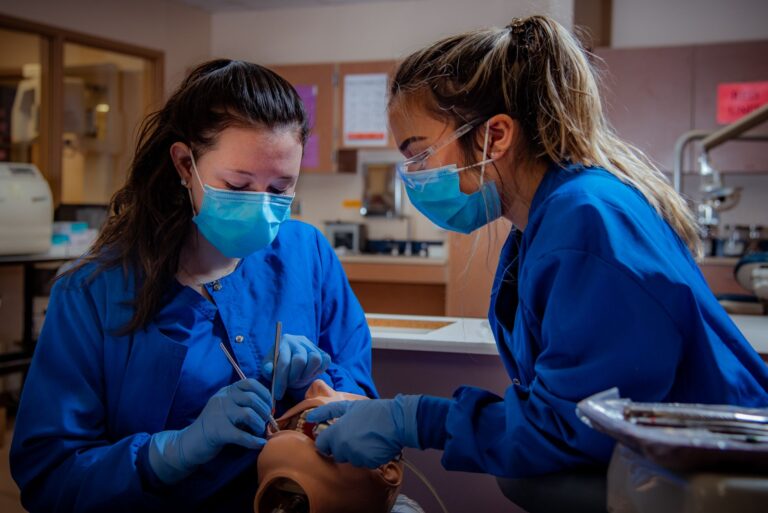
Study Dentistry in Spain
Everything you need to know about studying dentistry in Spain in 2026: admission requirements, language, universities,…
-

Study Engineering in Spain
Everything international students need to know about studying engineering in Spain in 2026: admission requirements, language,…
-

Study Law in Spain
A complete 2026 guide to studying law in Spain: admission requirements, language of study, top universities,…
Universities in Spain
-

Comillas Pontifical University – Study, Admission and Fees
Admission requirements, tuition fees, language of study, housing and scholarships at Comillas Pontifical University in Madrid,…
-

Complutense University of Madrid – Study, Admission and Fees
Admission requirements at Complutense University of Madrid for non-EU students, actual fees, language of study, housing…
-

European University of Madrid – Study, Admission and Fees
Admission for international students, fee information, language of study, housing and scholarships at the European University…
Scholarships in Spain
-

Can You Study in Spain for Free?
Can you study in Spain for free? The truth: public fees are low for residents, scholarships…
-

Erasmus Mundus Scholarship in Spain
Discover the Erasmus Mundus scholarship in Spain: €1,400 a month for joint master’s programmes across countries.…
-

Fundación Carolina Scholarship
Details of the 2026 Fundación Carolina scholarship for Latin American students: eligibility, funding, visa and how…
Study in Spain guides
-

First Month in Spain: Checklist for International Students
A practical first-month-in-Spain checklist for international students: registration, enrolment, health insurance, TIE, banking and settling into…
-

Is Spain Safe for International Students?
Practical answers on whether Spain is safe for international students, with realistic tips on daily life,…
-
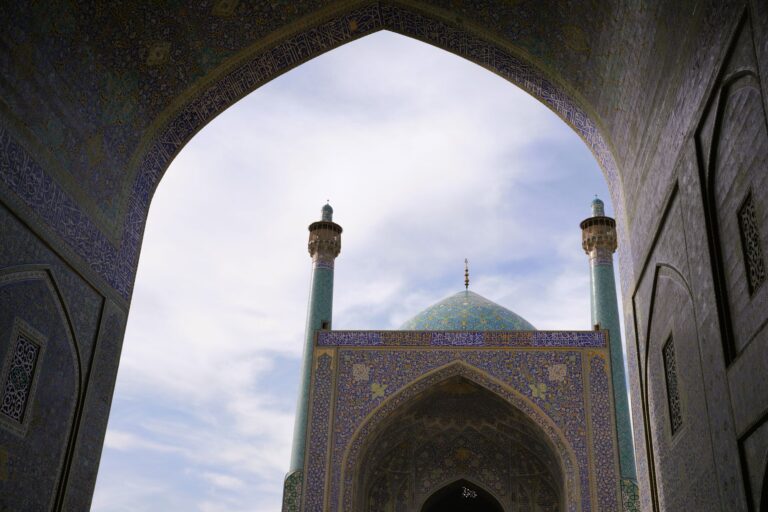
Muslim Student Life in Spain
A practical guide to Muslim student life in Spain, from academic enrolment to living peacefully with…
Thinking about studying in Serbia too?
-

Study in Serbia
Thinking about studying in Serbia in 2026? This guide covers tuition and living costs, top universities,…
-
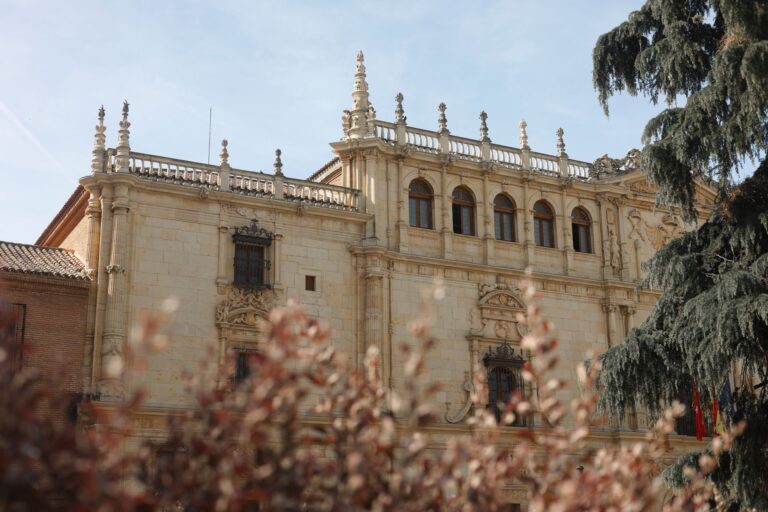
Study in Spain or Serbia? Comparison 2026
Thinking of studying in Spain or Serbia? Compare 2026 tuition fees, language, work rules, residence after…