

If you are planning to study in Spain, mastering Spanish is a decisive step for your academic and social success. Whether you want to enrol at a Spanish university, follow a specialised programme, or look for work during your studies, understanding and speaking Spanish opens many doors. This complete guide covers every aspect of Spanish for studying in Spain, from recognised certificates to accredited schools, and on to programmes taught in English, with direct links to each sub-topic.
🧮 Calculate your study cost in Spain in your own currency – official fees by region and university, housing and living costs (estimated) and scholarship eligibility in one minute: Study cost calculator
Why learn Spanish before studying in Spain?
Spanish is not just a means of communication but a key to integrating into academic and social life in Spain. Even if you are studying on an English-taught programme, knowing Spanish improves your job prospects, makes it easier to communicate with classmates, and lets you use local resources and government services.
The official list of documents from the Ministry of Inclusion for a study residence application does not include any specific language certificate, but some universities and educational centres ask for proof of language proficiency as part of their admission requirements, and each sets the level required (often B2 for programmes taught in Spanish).
The main Spanish proficiency certificates in Spain
Spanish proficiency certificates are among the most commonly required qualifications when applying for study programmes or visas in Spain. The main ones are:
- DELE (Diplomas de Español como Lengua Extranjera): official diplomas awarded by the Spanish Ministry of Education and administered by the Instituto Cervantes, at levels from A1 to C2, with unlimited validity.
- SIELE (Servicio Internacional de Evaluación de la Lengua Española): a certificate run by the Instituto Cervantes in cooperation with the National Autonomous University of Mexico (UNAM), the University of Salamanca and the University of Buenos Aires; it has no fixed pre-set dates, gives an overall score from 0 to 1000, and is valid for five years.
Both certificates assess the four skills: listening, reading, writing and speaking, and are classified by CEFR levels (A1 to C2).
If you want a detailed comparison of the two, see DELE vs SIELE comparison to make the decision that suits you best.
The best schools for learning Spanish in Spain
Many centres offer Spanish courses for foreigners, and it is best to choose a centre accredited by the Instituto Cervantes, which is what the Ministry of Inclusion’s instructions point to for Spanish courses linked to a study residence. These schools offer intensive programmes, local teachers and an interactive environment that supports practical learning.
Providers of language courses include:
- The Spanish cultural institute (Instituto Cervantes)
- Spanish-teaching centres accredited by the Instituto Cervantes, whose list can be found on the accreditation system website (acreditacion.cervantes.es), as well as the official language schools (EOI)
- Universities offering preparatory programmes (pre-university language courses)
For an up-to-date list of the best schools for learning Spanish, go to The best Spanish language schools in Spain.
English-taught study programmes in Spain
If you do not yet speak Spanish well, there is no need to worry. Many Spanish universities offer programmes taught in English, especially in technical subjects, science, business administration and engineering.
These programmes are an ideal option for international students who want to study in Spain without needing a DELE or SIELE certificate at the application stage, but they do not remove the need to learn the language later.
For a list of the best universities teaching in English, click English-taught programmes in Spain.
The role of the Instituto Cervantes in learning Spanish
The Instituto Cervantes is the official body responsible for promoting the Spanish language and Spanish culture around the world. It is one of the most trusted institutions for issuing DELE certificates and offering intensive training courses.
The institute offers a range of courses from beginner level (A1) to advanced level (C2), including preparation for the official exams. DELE exams are also held through a network of exam centres around the world, and you can find their lists and dates on the website examenes.cervantes.es.
For comprehensive information on Cervantes centres worldwide, the exam calendar and registration, go to Instituto Cervantes: guide for international students.
The student visa for Spain: language and document requirements
To obtain a study visa for Spain (autorización de estancia de larga duración por estudios), you must submit documents that prove your ability to study, including, in some cases, proof of Spanish proficiency.
The main requirements include:
- Official acceptance by an accredited university or educational centre.
- Payment of tuition fees (enrolment at an accredited centre).
- A passport valid for at least one year.
- Private health insurance (approved in Spain).
- A criminal record certificate for the last five years, if your stay exceeds six months.
- A medical certificate, if the consulate requests it.
- Legalisation of foreign documents (by Apostille or legal authentication) + official translation into Spanish.
- Proof of financial means: 100% of the monthly IPREM figure (600 EUR a month at the 2026 value), plus 75% for the first family member and 50% for each additional one. The student’s own 100% of IPREM is not required if they prove that housing has been paid in advance for the whole stay (Article 35 of RD 1155/2024).
If you are studying higher education (a bachelor’s, master’s, doctorate or equivalent), you are allowed to work up to 30 hours a week within the autonomous community where you study (and its neighbouring localities), provided the work is compatible with your studies. For other types of study, including language courses, a separate work authorisation is usually required.
You must apply for the study visa at the Spanish embassy or consulate in your country, submitting it at least two months before your studies begin, and the maximum period for a decision is one month from the date of application.
Residence and visa: practical steps after arrival
After you arrive in Spain, you must apply in person for your foreigner identity card (TIE) at the competent police station (Comisaría) within one month.
This card is the identity document of a foreign resident and is used for official dealings within Spain.
As your permit approaches its end date, you can request an extension by proving continued study and enrolment (proof of enrolment); the extension period matches the length of the studies, with a maximum of one year per extension, according to the official page of the Ministry of Inclusion.
Frequently asked questions
Can I study in Spain without a Spanish language certificate?
Yes, you can study in Spain without a Spanish language certificate if you are studying on an English-taught programme. But if you are studying on a programme taught in Spanish, a DELE or SIELE certificate is often required as part of the admission requirements.
What is the minimum funding required to study in Spain?
You must prove resources equal to 100% of the monthly IPREM figure (600 EUR a month at the 2026 value), plus 75% for the first family member and 50% for each additional one. The student’s own 100% of IPREM is not required if they prove that housing has been paid in advance for the whole stay (Article 35 of RD 1155/2024).
Can I work while studying in Spain?
It depends on your type of study. In higher education you may work up to 30 hours a week, provided the work is compatible with your studies and within the autonomous community where you live (and neighbouring localities), with no additional application. In other cases, including language courses alone, a separate work authorisation is usually required.
How long is a study visa for Spain?
The length of the residence matches the length of the studies you are enrolled in, and varies by type of study. If needed, you can request an extension by proving continued study, and the details should be checked on the official page of the Ministry of Inclusion.
Spanish for studying in Spain is not just an administrative requirement but a gateway to a rich educational experience, wide professional opportunities and deep social integration. Whether you plan to join a university, take a language course, or look for work, learning Spanish is a strategic step in your academic journey.
Make use of the resources available, from accredited language schools to the DELE and SIELE certificates, and start your journey in Spain with confidence. Remember that every step makes a difference, and that you are not alone on this journey.
Official sources
- Instituto Cervantes: DELE exams
- SIELE: exams
- Instituto Cervantes: accredited centres
- Ministerio de Inclusión: estancia por estudios
Universities in Spain
-

Comillas Pontifical University – Study, Admission and Fees
Admission requirements, tuition fees, language of study, housing and scholarships at Comillas Pontifical University in Madrid,…
-
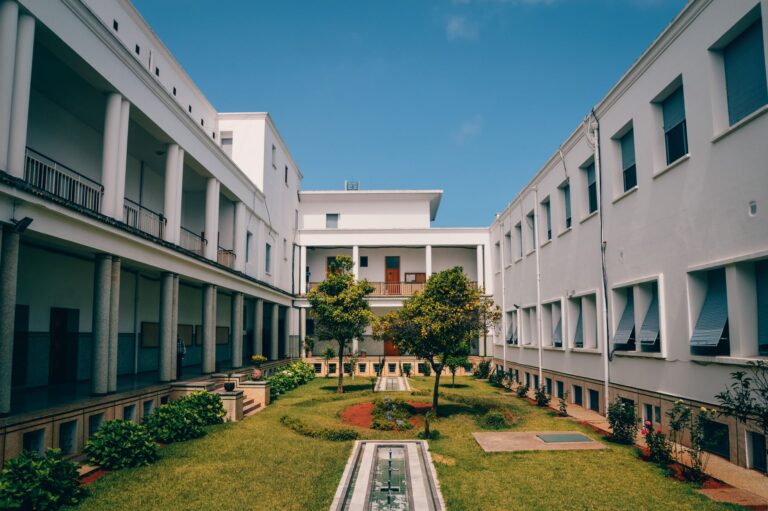
Complutense University of Madrid – Study, Admission and Fees
Admission requirements at Complutense University of Madrid for non-EU students, actual fees, language of study, housing…
-

European University of Madrid – Study, Admission and Fees
Admission for international students, fee information, language of study, housing and scholarships at the European University…
Scholarships in Spain
-

Can You Study in Spain for Free?
Can you study in Spain for free? The truth: public fees are low for residents, scholarships…
-

Erasmus Mundus Scholarship in Spain
Discover the Erasmus Mundus scholarship in Spain: €1,400 a month for joint master’s programmes across countries.…
-

Fundación Carolina Scholarship
Details of the 2026 Fundación Carolina scholarship for Latin American students: eligibility, funding, visa and how…
Study in Spain guides
-
Daily Life as an International Student in Spain
A realistic guide to daily life as an international student in Spain: settling in, housing, transport,…
-

First Month in Spain: Checklist for International Students
A practical first-month-in-Spain checklist for international students: registration, enrolment, health insurance, TIE, banking and settling into…
-

Is Spain Safe for International Students?
Practical answers on whether Spain is safe for international students, with realistic tips on daily life,…
Thinking about studying in Serbia too?
-

Study in Serbia
Thinking about studying in Serbia in 2026? This guide covers tuition and living costs, top universities,…
-
Study in Spain or Serbia? Comparison 2026
Thinking of studying in Spain or Serbia? Compare 2026 tuition fees, language, work rules, residence after…