

The University of Valencia (Universitat de València) is one of the leading public universities in Spain, offering outstanding academic programmes in many fields, from science to engineering, medicine and the social sciences. If you are an international student thinking of studying in Spain, the University of Valencia may be a good choice thanks to the variety of its programmes and the low general price per credit in the Valencian Community, though note that a non-resident foreigner from outside the European Union pays double the price. In this complete guide we cover everything about studying at the University of Valencia, from admission requirements and tuition costs to language of instruction, housing and scholarships, focusing on the needs of international students.
🧮 Calculate your study cost in Spain in your own currency – official fees by region and university, housing and living costs (estimated) and scholarship eligibility in one minute: Study cost calculator
University of Valencia: Overview of the Institution
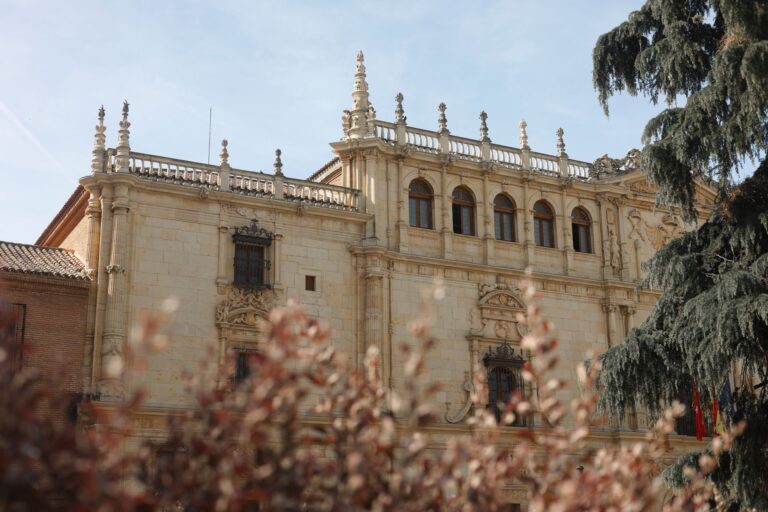
The University of Valencia is a public university in the Valencian Community (Comunitat Valenciana), not in Catalonia. It was founded in 1499, is considered one of the oldest universities in Spain, and offers programmes accredited by the Spanish Ministry of Education. It is located in the city of Valencia, an important cultural and economic centre on Spain’s eastern coast, known for its mild climate, safe environment and cultural diversity, which makes it an ideal destination for international students.
The university has tens of thousands of students and offers programmes from bachelor’s to master’s and doctorate; check the university’s website for current figures for each faculty and programme. It appears in global rankings such as QS and THE; check the two rankings’ websites for the current position.
For more details on university options in Spain, see the best universities in Spain and compare the available options.
University of Valencia admission requirements for international students
Admission requirements at the University of Valencia depend on the education system the student completed, especially for students from countries that do not have grade-equivalence agreements with Spain.
Students from most countries outside the EU need to have their secondary school certificate recognised (homologación) by the Spanish Ministry of Education, to convert their certificate to the equivalent of the Spanish Bachillerato. This process requires official documents, including the secondary school certificate, transcripts and an official translation into Spanish, as well as authentication (Apostille) of the documents by the Spanish embassy or the international authentication office.
After homologation, UNEDasiss issues the access accreditation (with a maximum of 6 points for these systems according to the University of Valencia’s 2026-27 guide), which can be raised to 10 points by sitting the Pruebas de Competencias Específicas (PCE) organised by UNEDasiss (up to 6 subjects, with at least 4 recommended); two of them are weighted to raise the admission score for a degree up to 14 points. Applications for places are submitted through the joint pre-registration of the Valencian public universities (preinscripcion.gva.es).
Note: some degrees require proof of a language level before pre-registration or at enrolment (see the language section). Check the list of degrees with special requirements on the university’s official website.
For more information on application procedures, see steps to apply to study in Spain.
Tuition fees at the University of Valencia – actual costs
Tuition fees at the University of Valencia are set by decisions of the regional authority (the autonomous community), and are calculated by the number of credits (ECTS). The Valencian government (Consell) sets prices for public universities in the region by decree (Decreto 101/2024, as amended).
In the Valencian Community fees are set by the ECTS system, where an academic year equals 60 credits. According to the consolidated text of Decree 101/2024 (version of 18/12/2025), the price per credit on first enrolment in a bachelor’s degree ranges between 12.79 and 18.00 € depending on the experimentality level (A–D), that is, about 767 to 1,080 € for 60 credits for Europeans and residents. A non-resident foreigner from outside the European Union (a study permit does not count as residence) is charged double the price (Article 6), that is, about 1,535 to 2,160 € for 60 credits before administrative fees, up to a maximum of 100% of the cost of the service. The decree was later amended by Decree 122/2026 (August 2026); we have not checked its effect on these figures, so please check the current text.
For comparison, the general price at Catalan public universities is 17.69 € per credit, and a university may set a higher price for non-resident foreigners from outside the European Union up to a maximum of 100% of the cost (Decret 125/2025, Article 1.5).
Note: the price per credit is calculated according to the experimentality level of the degree (Annex III of the decree); check your degree’s level and the updated figures on the University of Valencia’s official website.
| Type | Approximate fees (EUR/year) | Notes |
|---|---|---|
| Bachelor’s (general programmes) | 767 – 1,080 (Europeans/residents); 1,535 – 2,160 (non-resident, non-EU) | Depends on experimentality level A–D (12.79–18.00 €/credit), before administrative fees |
| Master’s (general programmes) | About 2,120 (35.34 €/credit × 60) for Europeans and residents; about 4,241 (70.68 €/credit) for non-resident, non-EU students | For master’s not qualifying for a regulated profession; some have an exceptional price, and those qualifying for a profession follow the degree scale (12.79–18.00 €/credit before doubling) |
| Doctorate | Not confirmed by us | Check the decree and the official website; we do not guarantee that scholarships covering the fees exist |
To compare with study costs in other countries, see the cost of studying in Spain and the comprehensive cost analysis.
Language of study at the University of Valencia
According to the University of Valencia’s 2026-27 bachelor’s guide, Valencian is the university’s own language and is official alongside Spanish, and English is a “working language”; all three languages are used in teaching depending on the group and programme. English-taught groups are available in some degrees (such as ADE (business administration), Law, Economics, Pharmacy, Medicine, Psychology and International Business).
To join English-taught groups in the degrees mentioned, a B2 level of English is required, shown by a recognised certificate or an exam run by the university (and in International Business it must be shown at enrolment); some degrees require B1 before pre-registration. A foreign student who speaks neither Valencian nor Spanish must show B2 in one of them to join certain degrees, including ADE, Economics, Pharmacy, Medicine, Dentistry, Tourism and Biology; the full list is in the university’s official guide.
Language courses may be available for international students; check the official website for details and cost.
Housing and accommodation in Valencia
Valencia is one of the European cities that offers suitable housing options for students, in terms of both price and quality. There are many housing options, from university accommodation to furnished flats rented from individuals.
University accommodation at the University of Valencia is a preferred option for many students, as it offers easy access to campus, an integrated study environment and student support services. Student housing options may be available, and prices vary by type and facilities (we have no confirmed official figure; check the official website).
For private housing, you can find furnished flats of average size at unofficial estimated prices starting from around 500–800 € per month or more, depending on location and size. We recommend looking for housing before you arrive, especially at the start of the academic year when competition increases.
Valencia is safe and easy to get around, with an efficient public transport network, which reduces the need for a private car.
Scholarships at the University of Valencia
We do not have a confirmed list of University of Valencia scholarships aimed at international students. Options you should check:
- University scholarships: see the official scholarships page on uv.es; we do not guarantee that a scholarship is available for your category.
- External scholarships: from the governments of home countries or international bodies, each with its own conditions.
Applicants are generally required to show good academic performance and to provide a recommendation letter, a letter of motivation and documents proving financial need. Scholarship coverage varies from one body to another.
For more information on scholarships, see scholarships in Spain.
Visa and residence in Spain
International students who plan to study in Spain for more than 90 days must obtain a long-stay study permit (autorización de estancia de larga duración por estudios). This visa is issued by the Spanish embassy in the student’s country and is a basic condition for entering Spain.
The basic visa requirements include:
- Official acceptance letter from the University of Valencia.
- University enrolment certificate.
- Passport valid for at least one year.
- Private health insurance valid in Spain (approved by the Spanish authorities).
- Criminal record certificate (from the last 5 years).
- Medical certificate showing the student is free of contagious diseases.
- Proof of financial means: 600 € per month (7,200 € per year), with an additional amount required for each accompanying family member (check with the consulate).
After arriving in Spain, you must apply for the TIE card at the National Police (Policía Nacional) within one month of entry.
Note: under Article 57 of RD 1155/2024 you can work a maximum of 30 hours per week within the autonomous community where you study (the Valencian Community) and the neighbouring border localities, provided it does not interfere with your studies. After graduation (EQF 6 or above), a 24-month job-search residence permit is available, with no work allowed during it.
Frequently asked questions
Can I study at the University of Valencia without being fluent in Spanish?
Yes, you can study in some programmes taught in English, especially in science, engineering and economics. But English groups usually require a B2 level with a recognised certificate or the university’s exam. For specific degrees, B2 in Spanish or Valencian is required for those who do not speak them; check the degree you want.
What are the living costs in Valencia?
Approximate unofficial estimate: monthly living costs in Valencia may start from around 700–1,000 € or more, depending on lifestyle. These costs include housing, food, transport and daily activities. Costs can be reduced through university accommodation or by sharing a flat with fellow students.
Are scholarships awarded to international students at the University of Valencia?
Scholarships may be available, but we do not have a confirmed list for international students; check the official scholarships page and apply early with the required documents.
How long is a student visa for Spain?
The competent authority sets the length of the permit according to the length of the programme, and it is extended provided you continue studying and submit proof of enrolment; check the updated conditions.
If you are looking for an outstanding educational experience in a safe and cultural environment, the University of Valencia may be a good choice for international students, provided you account for the doubled fees for non-residents from outside the European Union and check the language requirements for each degree. Start by reviewing the official sources below and the application steps.
Official sources
- Universitat de València (official site)
- UV – Admissió: preuniversitaris de fora de la Unió Europea
- UV – Guia d’estudis de grau 2026-2027
- DOGV – Decreto 101/2024 (texto consolidado)
- Generalitat Valenciana – Decret de preus públics
- Generalitat Valenciana – Preinscripció universitària
- UNEDasiss
- BOE – Real Decreto 1155/2024
More universities to consider
-

Polytechnic University of Catalonia (UPC): Study, Admission and Fees
Admission requirements at the Polytechnic University of Catalonia (UPC) for international students, actual non-EU tuition fees,…
-

Polytechnic University of Madrid (UPM): Study, Admission and Fees
Admission requirements at the Polytechnic University of Madrid (UPM) for international students, tuition fees for non-EU…
-

Polytechnic University of Valencia – Study, Admission and Fees
Learn about Polytechnic University of Valencia (UPV) admission requirements for international students, actual tuition fees, language…
-

Pompeu Fabra University (UPF): Study, Admission and Fees
Everything you need to know about Pompeu Fabra University in Barcelona: admission requirements for international students,…
-

Ramon Llull University (Esade) – Study, Admission and Fees
Admission, first-year tuition fees, language of instruction, housing and scholarships at Ramon Llull University (Esade) in…
-

University of Barcelona – Study, Admission and Fees
Admission requirements at the University of Barcelona for international students, actual tuition fees, language of study,…
Scholarships in Spain
-

Erasmus Mundus Scholarship in Spain
Discover the Erasmus Mundus scholarship in Spain: €1,400 a month for joint master’s programmes across countries.…
-

Fundación Carolina Scholarship
Details of the 2026 Fundación Carolina scholarship for Latin American students: eligibility, funding, visa and how…
-

Master’s Scholarships in Spain
Discover master’s scholarships in Spain for 2026 through Erasmus Mundus and university schemes: requirements, funding, application…
Study in Spain guides
-

First Month in Spain: Checklist for International Students
A practical first-month-in-Spain checklist for international students: registration, enrolment, health insurance, TIE, banking and settling into…
-

Is Spain Safe for International Students?
Practical answers on whether Spain is safe for international students, with realistic tips on daily life,…
-

Muslim Student Life in Spain
A practical guide to Muslim student life in Spain, from academic enrolment to living peacefully with…
Thinking about studying in Serbia too?
-

Study in Serbia
Thinking about studying in Serbia in 2026? This guide covers tuition and living costs, top universities,…
-
Study in Spain or Serbia? Comparison 2026
Thinking of studying in Spain or Serbia? Compare 2026 tuition fees, language, work rules, residence after…